


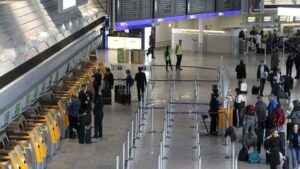
PASSENGER traffic in Nigeria has stagnated at 15 million over the past five years, raising concerns within the aviation industry despite an increase in the number of operating airlines.
According to the executive summary of flight operations, the combined figure of local and international passengers was just above 15 million.
The trend has become more evident over the past year, reflecting economic pressures on consumers and raising concerns about the sustainability of the sector.
Nigeria is the second-largest domestic aviation market in Africa, with over 10.5 million passengers in 2025, trailing South Africa’s 28 million, according to the Federal Airports Authority of Nigeria (FAAN).
According to data from Airport Council International (ACI) for the Africa region, Egypt ranked third with 7.1 million passengers, followed by Kenya with 4.1 million and Morocco with 3.8 million passengers. Others include Tanzania (3.6 million), Algeria (2.9 million), Ethiopia (1.7 million), Angola (1.4 million), and Mozambique with 964,292 passengers.
Despite an increase in the number of domestic airlines, the figure showed a gradual decline over the years.
In 2021, Nigeria had 10 domestic airlines serving 12,050,264 passengers. However, by 2025, despite an increase to over 15 airlines, the number of domestic passengers dropped to 10.5 million, reflecting a 12.5% decrease. The domestic carriers operating in 2021 included Aero Contractors, Arik Air, Azman Air, Dana Air, Overland, Air Peace, Max Air, Ibom Air, United Airlines, and Green Africa.
Despite the cessation of operations for Azman and Dana Air in 2024, the number of operating airlines has increased. Current domestic carriers include Air Peace, Arik Air, Aero, Green Africa, Overland, Xejet, Ibom Air, Enugu Air, Rano Air, Max Air, Nigerian Eagles, Cally Air, Binani Air, United Nigeria Airline, and ValueJet, among others.
Industry stakeholders attribute the decline in domestic air travel in Nigeria to rising living costs, currency depreciation, and inflation, rather than capacity or competition issues. Air travel is becoming increasingly unaffordable, with base fares soaring from N50,000 to over N200,000. Domestic airlines, facing higher aviation fuel costs and reduced corporate travel budgets, have been compelled to raise ticket prices significantly.
As of the time of filing this report, one-way flight prices from Lagos to Abuja vary: Ibom Air at N180,000, Air Peace at N114,000, Arik Air at N113,000, and Max Air at N135,000.
While the NCAA has facilitated the issuance of Air Operator’s Certificates, aviation analysts warn that increased airline numbers without sufficient passenger demand could lead to industry failures and escalating operational issues, such as flight delays and cancellations.