


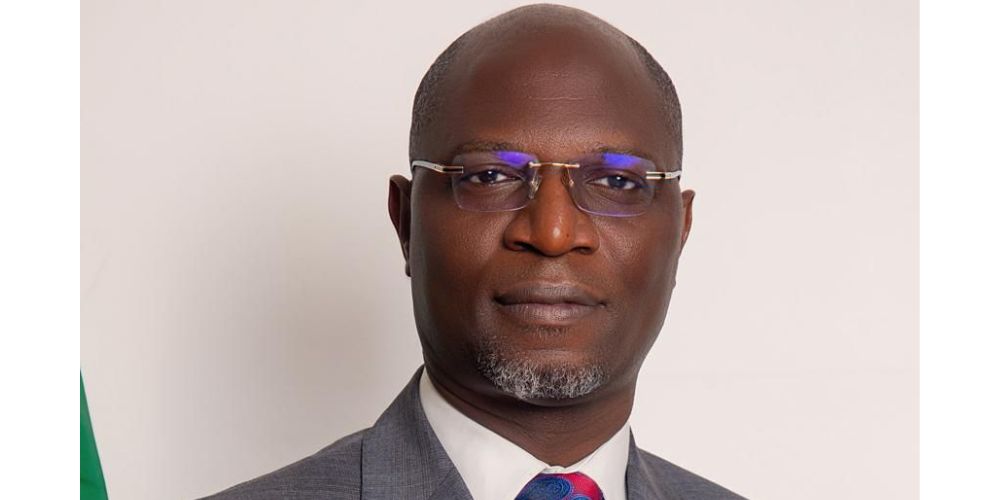
The Minister of Finance and Coordinating Minister of the Economy, Mr. Taiwo
Oyedele, has called for a national goal to build a $1 trillion capital market
within the next 10 years.
Oyedele said the country’s economic future depends on creating an environment
where investors have confidence to commit long-term capital.
Speaking during his inaugural lecture at his investiture as a Fellow of the
Capital Market Academics of Nigeria (CMAN) in Abuja on Tuesday, Oyedele
said Nigeria has the potential to achieve the target if it sustains ongoing reforms,
strengthens its institutions and expands opportunities for businesses to raise
funds through the capital market.
He said, “We need to set a target to build a $1 trillion capital market over the
next 10 years. If South Africa can build a capital market of that scale, if India
can, if Saudi Arabia can, if Indonesia can, why not Nigeria?”
According to him, the goal is realistic because Nigeria’s capital market has
recorded remarkable growth in recent years following macroeconomic reforms
and the banking sector recapitalisation programme.
He explained that stronger institutions, continued pension reforms, more
companies listing on the stock exchange, investment in infrastructure, improved
technology and sustained investor confidence would help drive the market to
the desired level.
Oyedele also raised concerns over the slow pace of commercial dispute
resolution in Nigeria, warning that lengthy court cases discourage both local and
foreign investors from committing long-term funds to the country.
He said commercial disputes that pass through the High Court, the Court of
Appeal and the Supreme Court can take about 15 years to conclude, a situation
he described as unacceptable for a modern economy seeking investment. “A
timeline that no rational allocator of capital can underwrite,” he said.
To address the problem, Oyedele proposed the establishment of a specialised
commercial dispute resolution tribunal dedicated to handling business and
financial disputes.
He said the tribunal should consist of judges and arbitrators with expertise in
commercial and financial matters, operate under strict timelines, adopt digital
case management systems and work alongside existing arbitration and
mediation mechanisms.
According to him, every financial instrument, whether a bond, syndicated loan,
private placement or structured investment, is ultimately based on contracts,
making speedy and impartial enforcement of agreements critical to the growth
of the capital market.
He said while existing investment tribunals help resolve disputes involving
governments and investors, Nigeria also needs a specialised system to settle
disputes between businesses quickly so that investors can have confidence in
the country’s legal environment.
Oyedele also urged Nigerians to change their attitude towards borrowing,
arguing that debt should not automatically be seen as a sign of financial
irresponsibility.
He said public discussions often portray debt as a moral failure, with
governments, businesses and individuals criticised simply for borrowing.
According to him, the real issue should not be the size of the debt but whether
borrowed funds are invested in projects capable of generating returns that
exceed the cost of the loans.
“The relevant question is never simply how much debt. It is always debt for
what and at what cost, against what return, and repaid on what terms,” he said.
On his part, the Director-General of the Securities and Exchange Commission
(SEC), Dr Emomotimi Agama, called for stronger collaboration between
regulators and academics, saying research-driven policymaking is essential for
strengthening Nigeria’s capital market and promoting inclusive economic
growth.
Speaking during the opening of the conference, Agama described the Capital
Market Academics of Nigeria as an important bridge between academic
research and financial market regulation.
“I have long believed that good regulation begins with good thinking. The
policies we make at the Securities and Exchange Commission are only ever as
strong as the evidence and the ideas that inform them,” he said.
According to him, research generated through academic conferences, journals
and peer-reviewed studies provides the foundation for evidence-based
regulation capable of responding to the evolving needs of Nigeria’s financial
markets.
He said the Commission regards academics as strategic partners whose ideas
can shape policies that strengthen investor confidence and support market
development.
Agama noted that Nigeria’s capital market is undergoing major reforms
following the enactment of the Investments and Securities Act, 2025, and the
implementation of a new 10-year Capital Market Master Plan.
He said the reforms require rigorous research, constructive scrutiny and honest
debate to ensure that regulatory policies remain responsive to emerging realities
and aligned with global best practices.