


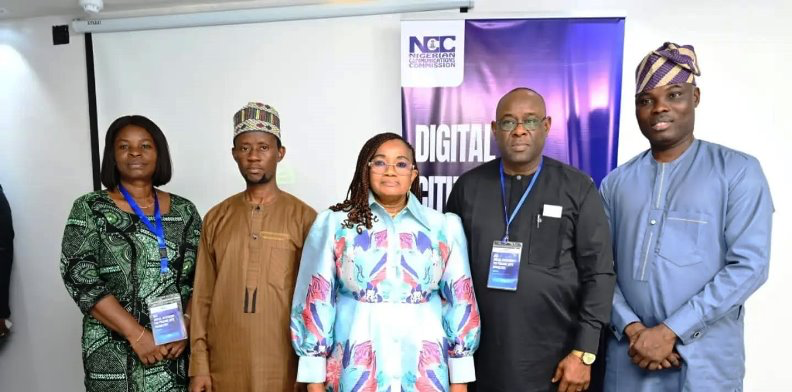
The Nigerian Communications Commission (NCC) has trained more than 100 Persons with Disabilities (PWDs) in Lagos on digital citizenship, cybersecurity, data protection and assistive technologies to strengthen digital inclusion and participation in Nigeria’s digital economy. The two-day training, held on September 9 and 10, 2026, was organized under the theme, “Empowering Persons with Disabilities Through Digital Citizenship for an Inclusive Digital Economy.”
The programme provided participants with practical knowledge on digital foundations, internet communication, cybersecurity, data protection, assistive technologies and responsible online participation. NCC Executive Vice Chairman and Chief Executive Officer, Dr Aminu Maida, represented by the Director, Digital Economy Department, Helen Obi, said digital citizenship involves the skills and responsible behaviour required to participate safely and meaningfully online.
Maida said digital citizenship goes beyond operating smartphones or computers, stressing the need to protect personal information, recognise scams and misinformation, safeguard digital identities, and understand digital rights and responsibilities. He added that technology could help PWDs overcome barriers to education and employment, support entrepreneurship and remote work, improve access to information and public services, and increase independence through assistive technologies.
Participants were trained to protect personal information, identify online scams and avoid sharing sensitive details with strangers. The programme also introduced accessibility features, including speech-to-text tools, designed to make mobile devices easier to use independently. Maida urged participants to see themselves as active contributors to Nigeria’s digital economy, saying their talents, ideas, businesses and aspirations could be advanced through technology.
The Lagos training forms part of a broader NCC initiative to provide digital skills training for PWDs across Nigeria’s geopolitical zones. The Commission is also implementing its E-Accessibility Project, which provides ICT tools and assistive technologies to institutions supporting PWDs, while its fourth NCC Hackathon, themed “Technology Without Barriers,” encouraged innovators to develop solutions that improve accessibility and inclusion.
The NCC said meaningful digital inclusion requires more than connectivity, calling for collaboration among government institutions, regulators, technology companies, development partners, civil society organisations and PWD groups. Maida said accessibility should be considered from the design stage of digital products and services, while the Commission remains committed to connectivity, digital skills, accessibility and online safety to enable PWDs to learn, work, do business, communicate and access services safely and independently.