


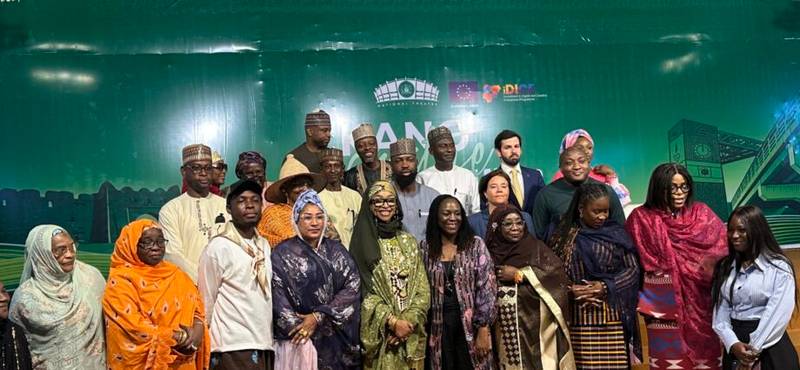
The Federal Government has unveiled a roadmap to create 2 million jobs in Nigeria’s creative economy by 2030, positioning culture, entertainment, innovation and intellectual property as key drivers of economic growth. The Minister of Art, Culture, Tourism and Creative Economy, Hannatu Musa-Musawa, disclosed the target at the closing session of the 2026 Kano Creative Summit, where she outlined plans to turn Nigeria’s creative talent into sustainable businesses, jobs and export opportunities.
The initiative is being pursued under the government’s Destination 2030 programme and an eight-point policy framework aligned with the administration’s Renewed Hope Agenda. Musawa said Nigeria’s creative economy cannot be understood solely through contemporary entertainment, citing Kano’s long history of creative and commercial traditions that predate the modern concept of the creative economy.
She noted that Kano’s dyeing pits, leatherwork, weaving, embroidery, blacksmithing, traditional performances and Kannywood film industry are longstanding creative assets that could generate greater economic value with stronger commercial structures and better market access. She also highlighted the city’s literary heritage, noting that women in Kano were writing, printing and selling novels in local markets as far back as 1958.
Musawa further referenced artists associated with the Zaria Art Society, whose work contributed to the development of modern Nigerian art. She said the country does not lack creative talent, but faces challenges in turning that talent into sustainable livelihoods and businesses.
The minister identified weak commercial structures, inadequate ownership systems and limited market access as factors limiting the benefits creative practitioners derive from their work. She warned that traditional craft practitioners are increasingly abandoning their occupations because the income generated from their work is often insufficient to sustain their livelihoods.
The Federal Government said the roadmap would leverage Nigeria’s creative assets to expand jobs, businesses and export opportunities. Under Destination 2030, the government aims to strengthen the sector’s commercial structures and market access while turning the country’s vast creative talent into sustainable economic value.