


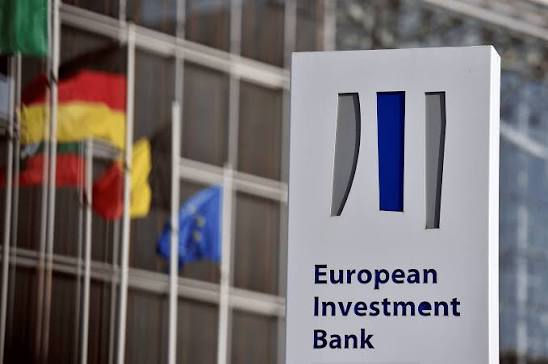
European development finance institutions have expanded their investment
presence in Nigeria with the launch of a fresh €20m Nigeria Country Window,
alongside indications that additional funding is being prepared to support
infrastructure, agriculture, healthcare, renewable energy, and small businesses.
The announcement was contained in a statement issued on Tuesday in Abuja by
the EU Delegation to Nigeria and ECOWAS, following the 10th
Nigeria–European Union Business Forum. European financiers said the new
commitments reflect growing confidence in Nigeria’s economic reforms and
long-term growth outlook.
The European Investment Bank disclosed that it signed over €500 million in
financing for Nigeria in the past year across public and private sector
operations, with further investments expected before year-end.
Senior Investment Officer, Corporate Division, European Investment Bank,
Loic Le Ruyet, said the bank’s portfolio covers sustainable transport, healthcare
manufacturing, agriculture, renewable energy, digital infrastructure, and support
for small and medium-sized enterprises.
“We have signed last year over €500 million of financing in the country, in the
public sector and in the financial sector mostly,” Le Ruyet said. “There is more
coming this year.”
He said the funding includes support for Lagos waterways transport, the
Development Bank of Nigeria to expand lending to priority sectors, healthcare
manufacturing through the Bank of Industry, and agricultural value chains in
cocoa and dairy.
The forum also featured the launch of a €20m Nigeria Country Window jointly
implemented by FMO, the Dutch entrepreneurial development bank, and the
European Development Finance Institutions Management Company, under the
European Union’s Agrifi and Electrifi blended finance programmes.
The facility is designed to channel financing to small and medium-sized
enterprises in agribusiness and rural electrification, while also mobilising
additional private capital into Nigeria.
Speaking on the initiative, Edilberto Jose Baquero of FMO said the structure
targets two critical development constraints. “It is important to recognise that in
Nigeria agriculture is a key driver of the economy, and access to energy remains
a challenge, specifically in rural communities,” he said.
“Bringing together these two facilities creates an opportunity to support more
integrated and sustainable investment that aligns with the needs and priorities of
Nigeria.”
Also speaking, William Barrault of EDFI MC said the initiative is intended to
go beyond direct lending by attracting co-investment from other European
development finance institutions. “We want to be catalytic. This is the entire
ecosystem we try to develop,” Barrault said.
Speaking during the financing session, Minister of State for Budget and
Economic Planning, Dr. Doris Uzoka-Anite, said the commitments reflect
confidence in Nigeria’s reform programme.
She said the initiatives align with the Renewed Hope National Development
Plan 2026–2030, adding that they would accelerate digital transformation,
strengthen healthcare value chains, improve infrastructure, and expand access to
finance for businesses.
“The facilities being announced today take on their strategic significance,” she
said. “They are not isolated initiatives. These are integral to the Renewed Hope
National Development Plan 2026 to 2030,” she said.