


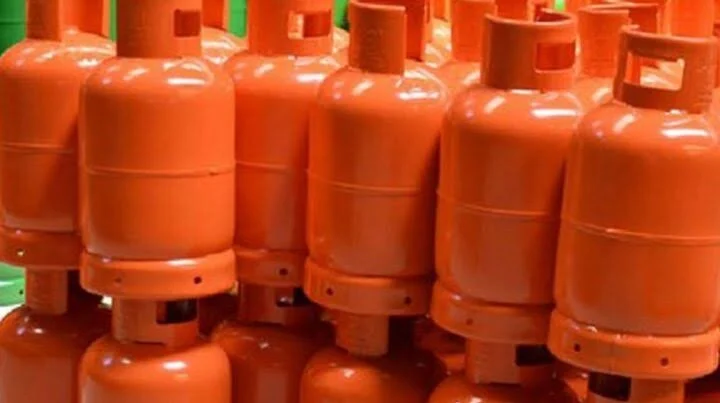
Published data by the Nigerian Upstream Petroleum Regulatory Commission shows Nigeria flared approximately 76.92 billion standard cubic feet of natural gas between January and May 2026 amidst rising Liquefied Petroleum Gas (cooking gas) prices and persistent concerns over domestic energy shortages.
The flared volumes represent gas that could have been channelled towards power generation, industrial use, compressed natural gas initiatives and domestic cooking gas supply in a country grappling with high energy costs.
A breakdown of the figures showed that Nigeria flared 17,166.08 million standard cubic feet of gas in January, accounting for 7.10 per cent of total gas production during the month. In February, the volume of gas flared dropped to 14,085.55 million standard cubic feet, representing 6.44 per cent of output.
The commission’s data showed that 15,575.10 million standard cubic feet were flared in March, equivalent to 6.40 per cent of total gas produced. The volume declined slightly to 14,517.95 million standard cubic feet in April, although the percentage of gas flared rose to 6.94 per cent.
In May, Nigeria flared an average of 0.57 billion cubic feet of gas per day, translating to roughly 15.58 billion standard cubic feet for the month, while the flare rate stood at 6.9 per cent.
The latest data came at a time when households and businesses continue to contend with high energy costs and concerns over the availability of alternative fuels. Findings showed that cooking gas prices jumped from an average of N1,000 per kilogramme in January and February this year to as high as N2,400 a few days ago.
This is also because local producers of LPG have been unable to meet domestic demands for gas, according to operators. For example, the sources stated that there is a decline in LPG supply from the Dangote Petroleum Refinery due to internal utilisation, not because the refinery exports, as is being speculated.
“The recent decline in LPG supply from the Dangote refinery, which has created a crisis in the domestic market, isn’t because of exports but is due to their internal utilisation for enhancing petroleum production capacity,” a source familiar with the development told PUNCH.
Although Nigeria holds Africa’s largest proven gas reserves, estimated at over 200 trillion cubic feet, a significant portion of associated gas produced alongside crude oil continues to be burnt off at oilfields.
Energy experts have repeatedly argued that reducing gas flaring could substantially improve domestic gas availability and support the government’s “Decade of Gas” initiative.
The NUPRC data, however, indicate that the country is yet to eliminate the long-standing practice. Despite the continued flaring, the commission noted in its May gas report that the country’s average daily gas production rose to 7.93 billion cubic feet per day, reflecting growth in upstream output.
According to the report, the May flare rate of 6.9 per cent underscores Nigeria’s commitment to ending routine gas flaring by 2030.
The Federal Government has repeatedly pledged to end routine gas flaring as part of its climate commitments under the Paris Agreement and through the Nigerian Gas Flare Commercialisation Programme.
The programme seeks to convert previously flared gas into commercially viable products, including liquefied petroleum gas, compressed natural gas and feedstock for power generation and industrial applications.
In December 2025, the NUPRC announced the issuance of permits to successful bidders under the Nigerian Gas Flare Commercialisation Programme, with the projects expected to attract about $2bn in investments and generate thousands of jobs. The Commission said the initiative could capture between 250 million and 300 million standard cubic feet of gas daily that would otherwise have been flared.
Energy experts have long maintained that ending routine gas flaring would not only improve environmental outcomes but also enhance domestic energy security.
Gas flaring has been associated with greenhouse gas emissions and environmental degradation, particularly in host communities within the Niger Delta region.
The latest figures suggest that while Nigeria has made progress in reducing the proportion of gas flared compared to historical levels, the practice remains a major challenge in a country seeking to expand access to cleaner and more affordable energy sources.
Commenting, a Professor of Energy at the University of Lagos, Dayo Ayoade, expressed concern over Nigeria’s continued struggle with gas flaring despite several policy initiatives and regulatory frameworks introduced to curb the practice.
Speaking in an interview with our correspondent, Ayoade said it was disappointing that gas flaring remained prevalent years after the Federal Government introduced laws and programmes aimed at promoting gas utilisation and ending routine flaring.
According to him, Nigeria has made significant policy progress in recent years, particularly through the Petroleum Industry Act 2021 and the Nigerian Gas Flare Commercialisation Programme, but implementation challenges continue to undermine the country’s objectives.
Ayoade said, “It is always disappointing when the government sets up policies and laws to address a problem, but those laws do not seem to work effectively. That naturally creates concern among stakeholders, investors, host communities and environmental advocates.
“In relation to gas flaring, Nigeria has actually done quite a lot in recent years, to be fair. Historically, we ignored gas and focused almost entirely on crude oil development. Gas was largely treated as a by-product and was simply flared away.
“Over time, however, we realised that the country had wasted billions of dollars’ worth of resources that could have been used to industrialise Nigeria, create jobs, power industries and improve economic growth. That realisation led to a significant shift in policy direction.”
The energy expert noted that the Petroleum Industry Act contains several provisions designed to discourage gas flaring while promoting investments in gas utilisation projects. He explained that although the legislation did not impose an outright ban on gas flaring, it was designed to progressively eliminate the practice through economic incentives and penalties.
“The Petroleum Industry Act of 2021 provides many different mechanisms that should address gas flaring. That is why it is somewhat troubling that we are still where we are today.
“Although the law did not expressly ban gas flaring, it was structured to eliminate it gradually by encouraging gas utilisation and imposing penalties for flaring. When you combine those provisions with other government initiatives, you would have expected far greater progress than what we are currently seeing,” he stated.
Ayoade said the Nigerian Gas Flare Commercialisation Programme was specifically designed to capture and monetise gas that would otherwise be wasted, adding that the programme should have significantly reduced flare volumes across oil-producing areas.
He said, “If you look at the provisions of the PIA alongside the Nigerian Gas Flare Commercialisation Programme, which was established to mop up stranded gas and convert it into economic value, you would think that the government has already put in place most of the necessary frameworks.
“On paper, Nigeria appears to have done a great deal. However, when you examine the actual utilisation figures and the volume of gas that continues to be flared, it becomes clear that there are still major gaps between policy intentions and practical outcomes.”
The don also pointed to several government initiatives aimed at deepening gas utilisation, including the Decade of Gas programme, the National Gas Policy, expansion projects by the Nigeria LNG Limited, and efforts to boost domestic gas supply to power plants and industries.
According to him, the persistence of gas flaring despite these interventions raises questions about regulatory effectiveness.
“Government declared the Decade of Gas. We have a national gas policy that promotes gas utilisation and discourages flaring. We have NLNG expansion projects and investments across the gas value chain. Domestic gas is increasingly being supplied to power plants. There are many initiatives currently ongoing.
“Given all these efforts, it would appear that the Nigerian Upstream Petroleum Regulatory Commission has been caught napping in certain areas because some of the regulatory bottlenecks that prevent the complete elimination of gas flaring have not been adequately addressed.”
Ayoade further identified inadequate infrastructure as one of the major obstacles to ending gas flaring in the country. He explained that many oil fields, particularly smaller and remote assets, lack the necessary facilities required to gather, process and transport associated gas for commercial use.
“One of the major reasons gas flaring persists is that the infrastructure required to gather, process and transport gas remains insufficient. We must remember that oil and gas fields are scattered across different locations. Some are small fields while others are large producing assets.
“Building the infrastructure required to capture and commercialise gas from these various locations can be extremely challenging and capital-intensive. Pipelines, processing facilities, compression stations and transportation networks all require substantial investment.
“That said, it has been widely stated that Nigeria is committed to ending routine gas flaring, and I believe that is a positive objective. However, achieving that target will require much more effort, stronger regulatory enforcement, greater investment, and above all, sustained political will.”
He added, “The policies are largely in place. The challenge now is implementation. If Nigeria truly wants to end gas flaring for good, then government agencies, regulators and industry operators must work together to remove the remaining obstacles and accelerate investments in gas infrastructure. That is the only way the country can fully unlock the enormous value of its gas resources while reducing environmental damage.”