


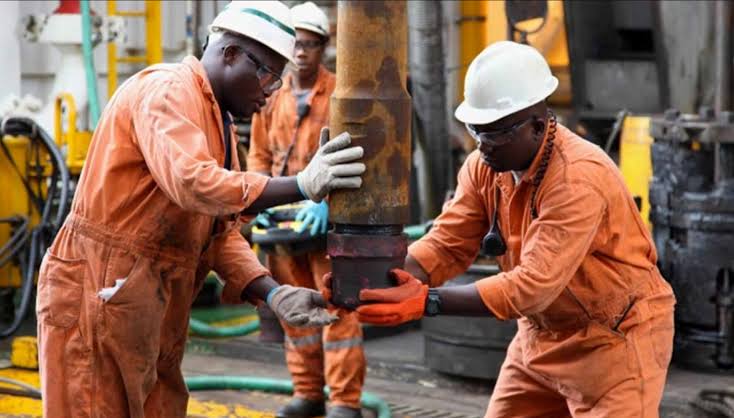
Nigeria’s oil and gas industry’s $25 billion yearly financing gap has created
opportunities for stronger partnerships between Nigeria and the United States
across strategic sectors, including energy, agriculture, and mining.
This was highlighted at a roundtable organised by ProvidusUnity Bank, in
partnership with the United States (U.S.)-based Regions Bank, in Lagos.
Both institutions noted that by deepening collaboration in these areas, the two
countries can mobilise capital more efficiently, unlock greater private
investment, and accelerate Nigeria’s economic transformation.
Head of Global Trade and Structured Finance at ProvidusUnity Bank and
convener of the roundtable, Dr Biodun Ariyo, said the initiative was designed to
deepen conversations around financing, trade facilitation, and investment within
Nigeria’s energy sector.
According to him, beyond deepening meaningful dialogue, the platform seeks to
connect industry stakeholders with the right financing partners and structures
required to accelerate growth across the oil and gas value chain.
He said Nigeria’s oil and gas industry faces an estimated yearly financing gap
of approximately $25 billion, making collaboration between local and
international financial institutions increasingly important.
Executive Director for International Trade Finance, Regions Bank, Thomas
Matthias, reaffirmed the institution’s commitment to expanding its presence in
Africa through strategic partnerships with credible local financial institutions.
“Africa has been overlooked for far too long, and that must change. Our
experience financing transactions in Nigeria has given us the confidence to
deepen our engagement in the market,” he said.
He said Nigeria is well-positioned to play a much larger role in Africa’s energy
future, noting that the bank is committed to partnering with ProvidusUnity Bank
to unlock that potential.
Matthias noted that evolving global energy dynamics present significant
opportunities for Nigeria to increase production, attract investment and
strengthen its position as a leading energy producer on the continent.
A key highlight of the roundtable was a panel discussion examining innovative
financing structures to accelerate investment across Nigeria’s oil and gas value
chain.
The panel discussions focused on the role of insurance in mitigating risks
associated with cross-border transactions, financing models for marginal and
idle assets, strategies for gas monetisation and the importance of long-term
liquidity in supporting capital-intensive energy projects.
Participants also explored opportunities to identify more bankable projects in
Nigeria and across Africa by leveraging the combined capabilities of both banks
to provide tailored financing solutions for operators throughout the energy
ecosystem.