


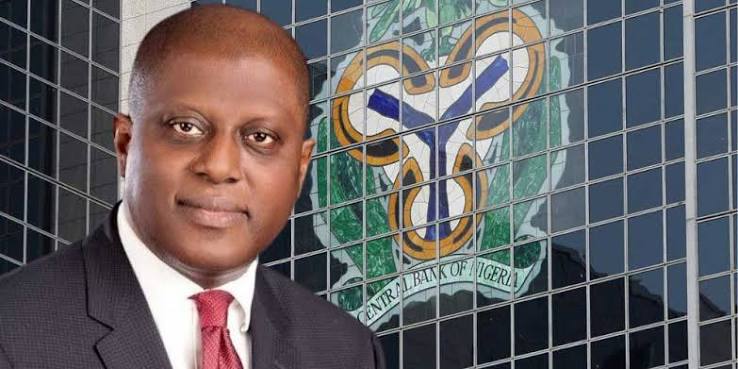
Members of the Monetary Policy Committee (MPC) of the Central Bank of
Nigeria (CBN), have warned that election-related fiscal spending ahead of the
2027 general elections poses one of the biggest threats to recent progress in
taming inflation, cautioning that excess liquidity from political spending could
undermine the effectiveness of monetary policy.
This was contained in the personal statements of MPC members following the
committee’s May meeting, suggest policymakers are increasingly shifting their
attention from external inflationary pressures to domestic fiscal risks as inflation
gradually moderates.
Although the MPC unanimously voted to retain the Monetary Policy Rate
(MPR) at 27.5 per cent, members argued that maintaining a tight monetary
stance would be necessary to guard against inflationary pressures that could
arise from pre-election spending by governments at various levels.
CBN Governor, Olayemi Cardoso, warned that fiscal liquidity associated with
rising oil revenues and political spending could complicate the bank’s efforts to
maintain price stability.
He stated: “We must also handle the fiscal-liquidity channel with care: oil prices
above the budget benchmark will generate a revenue windfall and larger FAAC
allocations, while pre-election spending at the sub-national level could add
further liquidity. We have to actively sterilise these injections, otherwise they
risk amplifying the very pressures we are working to contain.”
The governor’s position was echoed by Deputy Governor, Operations
Directorate, Emem Usoro, who noted that while the inflation outlook had
improved, risks remained firmly skewed to the upside.
“The balance of risks remains tilted to the upside. Domestically, disinflation
could be interrupted by renewed food price shocks, energy cost pass-through, or
pre-election liquidity pressures. Externally, capital flows remain sensitive to
global yields and risk sentiment, and a premature easing signal could weaken
FX market confidence and revive exchange-rate pass-through pressures. Fiscal
pressures, particularly rising public debt and potential election-related
expenditure, also represent upside risks to inflation that monetary policy must
remain alert to,” she stated.
Similarly, Deputy Governor,Corporate Services Directorate,Muhammad Sani
Abdullahi, identified election-related fiscal expansion as a key medium-term
risk to macroeconomic stability.
“Although exchange rates have remained broadly stable for over ten months,
imported inflation risks from energy prices, commodity-price shocks and
geopolitical tensions remain important. Election-related spending and
uncertainty also add a further layer of risk, as higher fiscal injections could raise
aggregate demand while weakening investor confidence. As always, I maintain
that preserving long-term macroeconomic stability is paramount,” he stated.
Abdullahi further stressed that, “Third, the policy stance must remain alert to
fiscal-driven liquidity injections, particularly as election-related activity
intensifies.”
Looking ahead, he added: “The main risks to this outlook are persistent
structural price pressures, excess liquidity that weakens policy transmission and
election-related fiscal injections ahead of the 2027 elections. These risks require
a careful balance between sustaining disinflation, preserving external stability
and avoiding unnecessary constraints on the recovery.”
For MPC member, Murtala Sabo Sagagi, election-cycle spending represents a
fiscal challenge that requires stronger coordination between monetary and fiscal
authorities rather than a purely monetary response.
“However, Nigeria’s improved macroeconomic buffers mean that these risks,
while not trivial, are not sufficiently acute to justify a change in the policy
stance at this meeting. Domestically, the primary risks remain fiscal slippage
and election-cycle spending pressures, which are best managed through
coordinated fiscal discipline rather than reactive monetary tightening,” he
stated.
Sagagi also urged closer collaboration between fiscal and monetary authorities,
saying: “Close coordination between monetary and fiscal authorities remains
essential. Increased fiscal releases associated with electoral cycles could
generate demand-side inflationary pressures that undermine current price
stability gains. The CBN should maintain active engagement with fiscal
authorities to promote a responsible and counter-cyclical spending framework.”
On his part, Bandele Amoo, also cited election-related fiscal risks among the
factors that could interrupt the country’s disinflation trajectory.
“The outlook for the Nigerian economy remains cautiously optimistic. Inflation
is expected to moderate over the medium term, supported by improved
exchange rate stability, easing base effects, and ongoing reforms. However,
risks remain tilted to the upside, particularly from global geopolitical
developments and energy price volatility, domestic supply-side constraints,
especially in food production, and fiscal pressures linked to budget
implementation and forthcoming general elections,” he noted.