


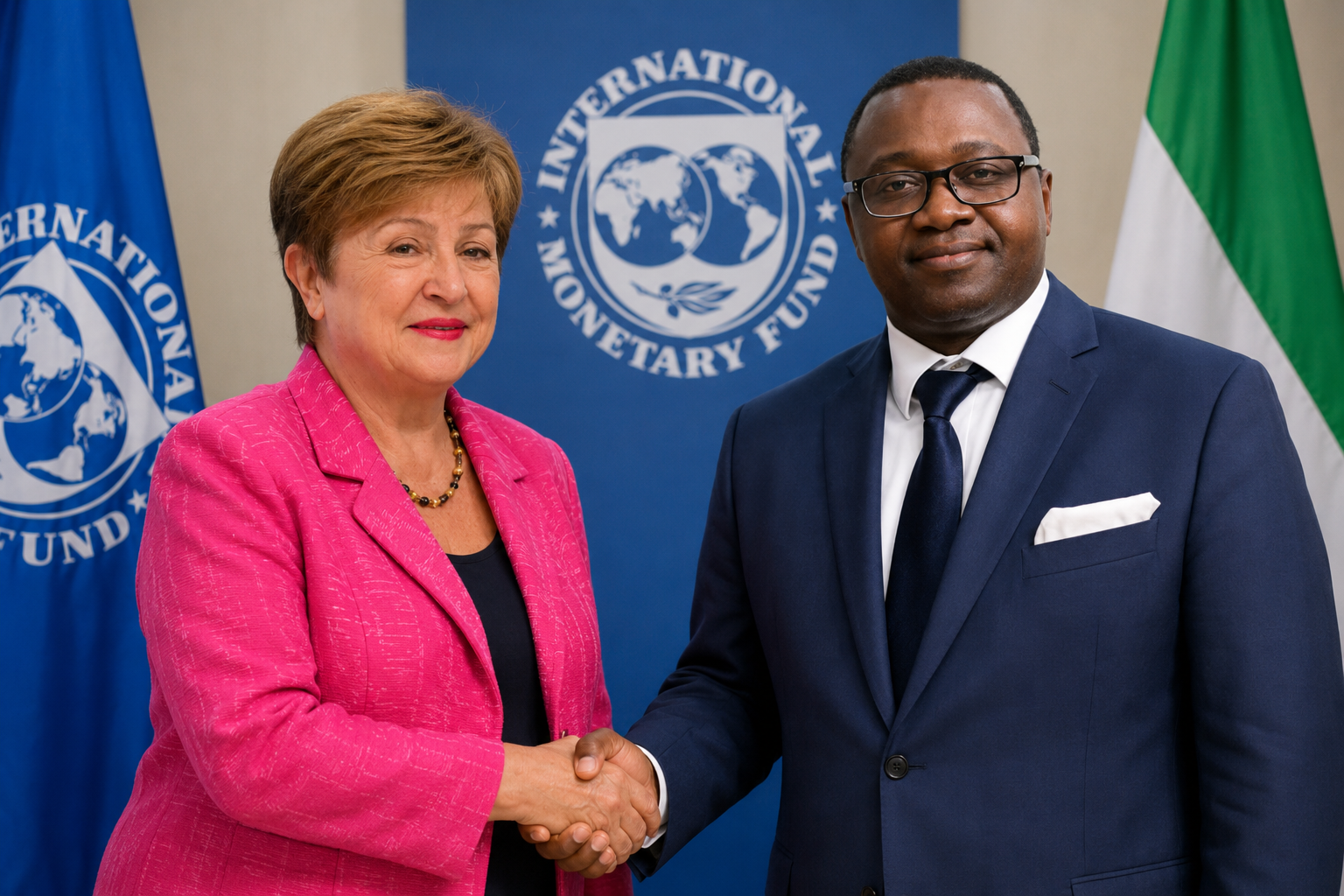
THE International Monetary Fund (IMF) has approved a new arrangement under the Resilience and Sustainability Facility (RSF) for Sierra Leone, valued at US$211.45 million, to support the country’s efforts to strengthen its resilience to climate shocks. This comes at the back of the completion of the third review under the Extended Credit Facility (ECF) arrangement, enabling an immediate disbursement of about US$31.72 million to Sierra Leone. This will bring the total disbursements under the arrangement to SDR 116.664 million (about US$158.6 million).
Sierra Leone’s macroeconomic policy tightening in recent years helped stabilize the exchange rate, lower inflation, contain borrowing costs, and restore private sector credit. However, reserve coverage remains low, and debt remains at high risk of distress.
While there is some fiscal space to address the fallout from the war in the Middle East, persevering on fiscal consolidation is critical to keep debt on a sustainable path. The RSF arrangement will focus on climate-sensitive public investment management, climate resilience, and financial stability.
In completing the review, the Fund approved Sierra Leone’s request for waivers of nonobservance of the continuous performance criterion on the ceiling on concessional external debt and the end-December performance criterion on net domestic assets, based on corrective actions taken by the authorities.
With this development, the disbursement of the arrangement under the Resilience and Sustainability Facility (RSF) for Sierra Leone will begin upon completion of the first review. The RSF will support the authorities’ efforts to strengthen resilience and external stability, with a focus on climate-sensitive public investment management, climate resilience, and financial stability.
The IMF acknowledged that Sierra Leone’s economic outlook remains stable, as growth accelerated last year, but spillovers from the Middle East war are weighing on the economy in 2026 similar to the experiences of most countries of the world. Growth is expected to fall to 4 percent, while end-year inflation will reach 11.6 percent.
Speaking on the Sierra Leonean economy, Mr. Kenji Okamura, Acting Chair and Deputy Managing Director of the IMF, noted that “The Sierra Leonean authorities’ policy tightening has helped stabilize the exchange rate, lower borrowing costs and inflation, and restore private credit access. However, reserve coverage remains low, and debt is at high risk of distress.
“Growth accelerated last year, but spillovers from the Middle East war are weighing on the economy in 2026. Growth is expected to fall to 4 percent, while end-year inflation will reach 11.6 percent.
“The authorities have some space to accommodate fiscal pressures arising from the Middle East war but persevering on fiscal consolidation—while protecting critical social spending— is key to keep debt sustainable. He added that “In the absence of a strong social safety net to provide targeted relief, the fuel price subsidy can help avoid disruptive price movements. However, it needs to remain temporary and transparent and adhere to the agreed cost ceiling.
He also said that “Advancing energy and public financial management reforms will help contain spending, avoid arrears accumulation, and strengthen arrears monitoring. Revenue mobilization gains will require stronger tax administration and mining revenue collection, while stronger debt management will help mitigate risks. On monetary policy, he was of the view that “Monetary policy should be tightened if inflationary pressures persist, and efforts should continue to strengthen safeguards and implement the new monetary policy framework. The authorities should rebuild reserves, allow the exchange rate to adjust to shocks, and repay overdue budget support loans to the Bank of Sierra Leone.
He called on the stepping up of structural reforms, including by strengthening arrears management, operationalizing the bank resolution framework, completing the resolution of the problem bank, and implementing the recommendations of the Governance and Corruption Diagnostic.
It is expected that the RSF arrangement will promote balance of payments stability by supporting resilience to climate shocks in the areas of public investment, social protection, fiscal planning, and financial risks.