


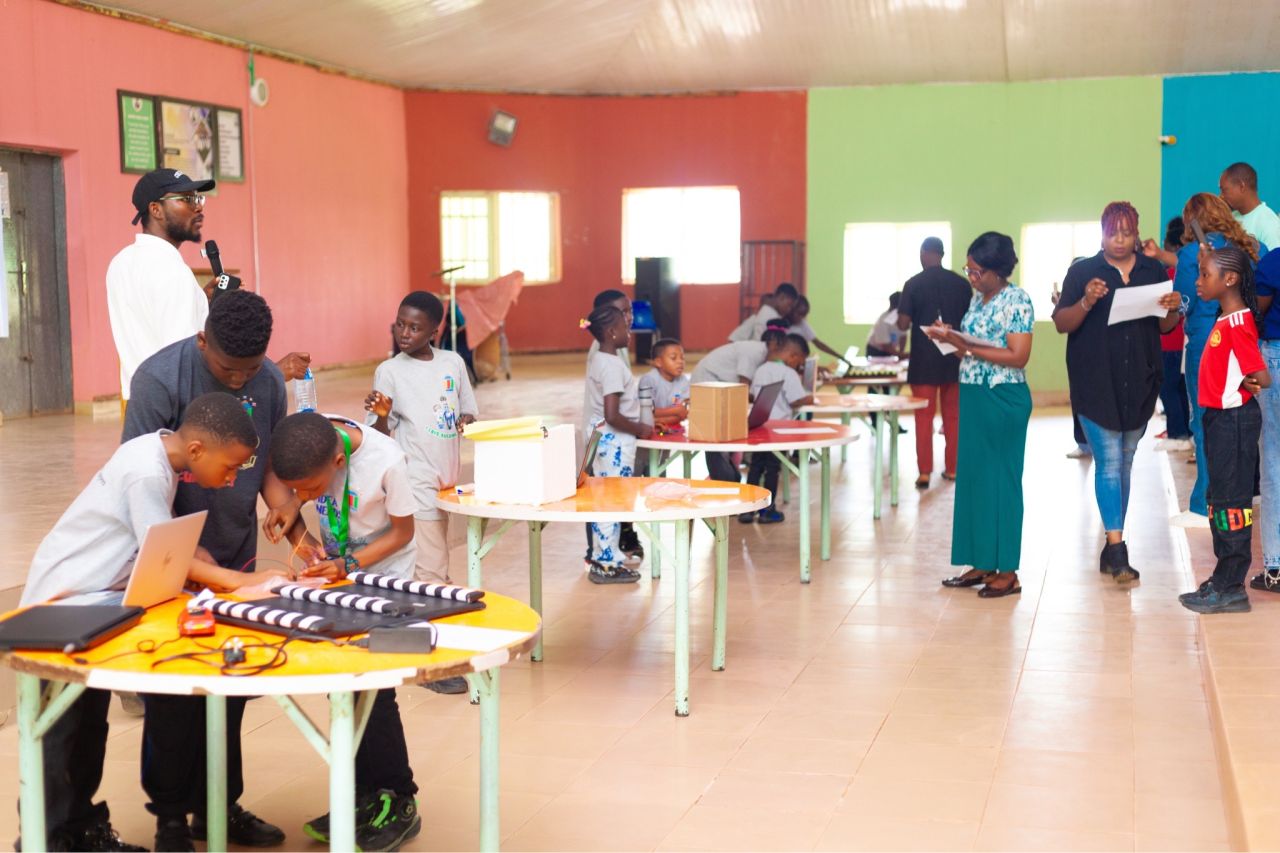
Thirty-nine young innovators gathered in Jos, Plateau State, on September 5, 2026, for Future feat Lab’s 2026 Makeathon, the culminating showcase of its annual Creators Camp. Unlike a conventional exhibition, participants had to build and demonstrate their projects against a five-minute countdown, testing their ability to collaborate, troubleshoot and solve problems under pressure.
The younger participants, aged six to 10, worked on projects including smart bins, smart staircases, fire detection systems and smart parking lots. Their smart parking system could detect approaching vehicles and determine whether spaces were available before opening or keeping the gate closed. Intermediate participants worked on components of a smart house, combining robotics, coding and design.
Teenage participants identified problems, pitched ideas and developed individual solutions. Their projects included an automatic water-tank indicator, smart attendance system, coded smart door, smart wardrobe and home automation solutions. The Makeathon encouraged them to move beyond seeing technology on screens to building and testing systems themselves.
The five-minute challenge also highlighted the importance of problem-solving and teamwork. Participants had to divide responsibilities, test components and make adjustments when systems failed. When the timer ended, one of the judges allowed the children to continue building, saying stopping them could discourage their interest in creating. The moment drew applause and reflected the programme’s emphasis on experimentation rather than simply finishing first.
Prizes were later presented, including tuition vouchers offering 25 per cent and 100 per cent discounts for future Creators Camp programmes. Founded and spearheaded by Moses Amama, Futurefeat operates from Rayfield, Jos, providing children and young people with practical exposure to engineering, coding and robotics through its Creators Camp, Open Lab Experience and Weekend Creators Club.
The Makeathon forms part of Futurefeat’s broader effort to shift young people from technology consumers to creators. Through hands-on activities, participants learn to identify problems, test solutions and improve their designs. The programme demonstrates how practical STEM education can build curiosity, confidence and problem-solving skills among young Nigerians.