


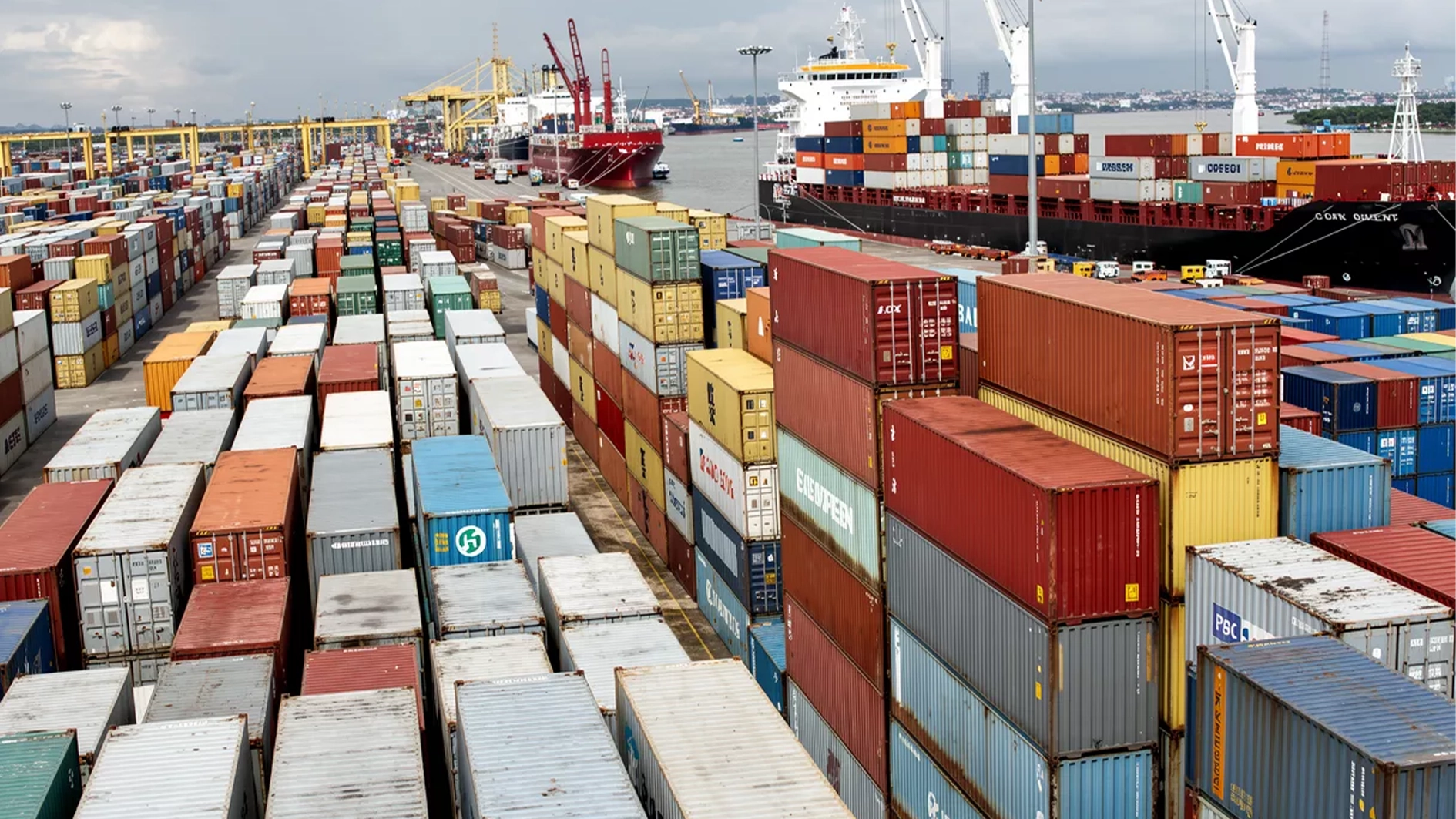
Exporters are currently counting their losses as over 1,000 export containers are trapped at Apapa Port.
The containers, filled with mostly perishable goods, have been trapped due to lack of vessels to transport them out of the country, possibly because of the closure of the Strait of Hormuz, which was opened recently.
The Head of Complaints at the Nigerian Shippers’ Council, Juliana Saka disclosed this while speaking during a media luncheon with journalists in Lagos.
According to her, there were originally 1,800 export containers, but 800 have been exported, leaving 1,000.
The council, she added, was able to engage the shipping line in a tripartite meeting with the Shippers Association of Nigeria, where an agreement was reached.
“Before now, you agree with me that most of the shipping companies were complaining that when they come to Nigeria, they go back empty; they don’t even see exports to take out. But now they are having more exports, and they don’t even have enough vessels to take them out.
“They are complaining of congestion, and I believe the NSC is equally looking at the issue of that congestion. But most especially are containers or exports to African nations and the far East. So at the moment, they complain that about 1,800 containers for exports were sitting at the Apapa Port. But they have been able to export 800 containers, leaving 1,000.
“So what we made them understand at the end of the journey is that if these export containers get to the destination, and if the cargoes inside are no longer good for export and are rejected at the destination, then the shipping line will be liable for the cost, both to the shipper and equally for the cost of the freight,” she said.
Reacting to this, an exporter and the Managing Director of LWL Concept, Lawal Lekan, blamed the war between the United States and Iran and the closure of the Strait of Hormuz as the major cause of the unavailability of vessels.
“First of all, I want to say that the basis of this issue still emanates from the closure of the Strait of Hormuz. It still signifies that Nigeria has a very good relationship and bilateral trade with the Middle East, China, among others. That’s why most of the containers that are trapped are the ones going through the Strait of Hormuz vicinity and neighbourhood,” he stated.
Also speaking, the Zonal Coordinator, Western Zone of the Association of Nigerian Licensed Customs Agents, Mr Femi Anifowose, blamed shipping lines operating in the ports.
“The shipping companies have been doing that for a long time. When they bring containerised goods from abroad now, instead of taking some exports back, they won’t; they will just leave them there and allow empty containers to remain. Even carrying empty containers is always a problem for them. That’s why you see some congestion. If you go around now, you will see there are some trucks carrying containers here and there” Anifowose said.
He urged the relevant government agencies involved, including the NSC, among others, to take the necessary steps towards addressing the issue.
“If you come to this country with 1,000 containers or 500 containers, you should go back with another 500 or 1,000 containers, nothing less. The exporters are losing money. For instance, if a container is exporting now, there are goods inside the container already that could spoil. If an exporter borrowed money from the bank to do such a business, how will the person get the money back? If a person wants to borrow money from banks, how will he get back his money?” Anifowose said.
On what the exporters may be losing due to this, he said: “They are losing billions of naira. Do you know how many goods are being exported out of this country? But I know they are carrying perishable items and heavy goods.”
The President of the National Association of Air Freight Forwarders and Consolidators, Mr Yinka Bakare, explained that the challenge is not only with Apapa Port but cuts across West Africa.
“It’s one of those problems we are having. I think it’s across probably West Africa and some major ports, which also affect Lagos in terms of restitution, taking-back time, and all this stuff. And you know currently that most of the exports are actually perishable; they are agro-produce that are time-bound, so it’s a whole lot of loss on behalf of Nigeria.
“We can’t put a figure to the loss because it’s not just one particular item that we have; we have various other items, we have cashew and soya, among others. But on average, if you are looking at the 20ft container, then we are talking about the sum of N20billion, if not more,” Bakare said.
The President of the African Association of Professional Freight Forwarders and Logistics of Nigeria, Frank Ogunojemite, said, “the report of about 1,000 export containers trapped at Apapa Port is a serious concern because it undermines Nigeria’s export drive, weakens the confidence of international buyers, and causes avoidable losses to exporters.”
He urged all relevant stakeholders, including shipping lines, terminal operators, and regulatory agencies, to resolve the bottlenecks and ensure the immediate evacuation of the affected containers.
“Nigeria cannot afford delays that discourage non-oil exports and hinder economic growth,” he said.