


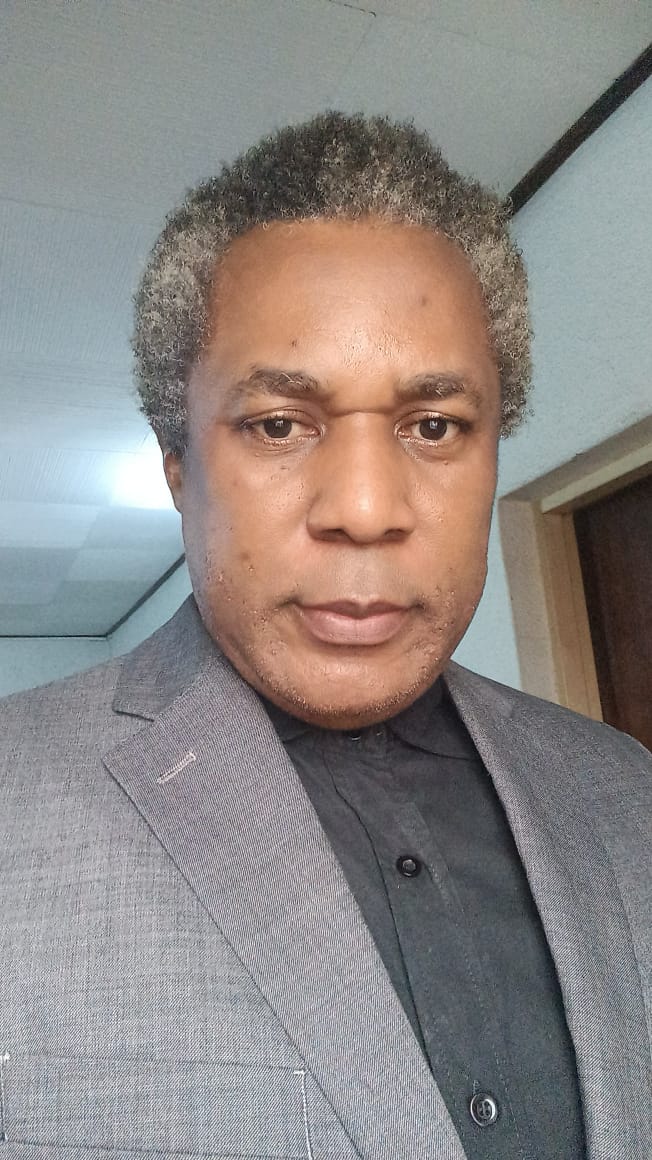
Kelechi Deca
Recently, I had a discussion with some friends on the seemingly intractable water
scarcity in Enugu which the present state government has promised to make a
thing of the past. The most interesting aspect of this storied challenge is that until
say 30 years ago, Enugu had potable water. So the question people should ask is
how the NCNC government OF Michael Okpara and the NPP government of Jim
Nwobodo provide pipe borne water to Enugu metropolis, but the succeeding
administrations in the last three decades have failed to do so?
Enugu, unlike other cities in the South East has a very unique topography, and the
water crisis is largely geological because borehole drilling is difficult and
expensive. That was why the colonial government piped water from outside the
city from 9 th Mile Corner to the city centre.
Nwadilibe Iloeje succinctly captured this in his book “A New Geography for
Nigeria which every Geography student who paid attention should know. Large
parts of Enugu sit on heavy coal deposits and shale, making it incredibly difficult
and expensive to drill boreholes as extensive underground coal deposits and hard
rock makes such nearly impossible. Groundwater is only available in a few specific
aquifers like the Ajali formation, forcing the city to rely heavily on surface water
schemes
The uniqueness of the Enugu situation is not in laying claims to being a modern
city without potable water, 85% of Nigerian cities do not know what potable
water is. A very unfortunate development because most of these cities all had
potable water about three decades ago, but while other state governments can
conveniently forget about the provision of pipe-borne water because the drilling
of boreholes at every house (an aberration in human development) has been
normalized, residents of Enugu cannot afford such expensive task.
The need to revive existing water supply initiatives, such as the 9th Mile and Oji
River schemes cannot be overemphasized. The existence of the Enugu State
Water Corporation (ESWC) is itself an irony if there is no water to supply.
Intriguingly, almost all the states in Nigeria without potable water all have water
corporations that get annual budgets and staffed with workers who are paid
monthly.
We have developed this attitude in Nigeria of seeing infrastructure challenges as
insurmountable, yet there are examples of other places where even tougher
challenges were overcome. For example, in Cape Town, South Africa, the city
faced “Day Zero,” a countdown to total taps running dry. Instead of giving up,
they turned to nature-based solutions. The city launched a water fund to clear
invasive alien plants in the watershed, recovering billions of litres of water
annually at a fraction of the cost of desalination.
Lima, the capital of Peru is the world’s second-largest desert city which sits in a
terrain just as challenging as Enugu’s hills. Lima revived ancient pre-Incan canals
called Amunas to catch and filter rainwater through the mountains during the wet
season, releasing it slowly into the city’s taps during the dry months.
Singapore has no natural aquifers or significant rivers, and limited land for
reservoirs but it overcame this by developing a world-leading system of rainwater
capture through Marina Barrage, high-grade water recycling (NEWater), and
desalination. Today, Singapore meets most of its own water demand despite its
geographical constraints.
If there is a city that should use challenging geography as an excuse to sit on its
palms and shift the responsibility to God like Enugu, that city is Las Vegas, USA.
Sitting in the middle of the Mojave Desert with less than 4 inches of annual
rainfall and no local surface water, Las Vegas succeeded by investing heavily in
water recycling which led to returning 90% of indoor water to Lake Mead via
treatment.
What was achieved by Las Vegas is regarded as very aggressive conservation
incentives, pioneering “intelligent” water management system for the Colorado
River.
In Tokyo, Japan, a city that is historically prone to droughts and floods due to its
geography, large population on a narrow floodplain with limited natural storage.
But the city succeeded through a vast network of underground floodwater
storage known as “underground temples” an advanced leak-reduction technology
with leakage under 3%, and extensive water reuse systems in buildings, turning a
vulnerable location into one of the world’s most reliable water systems.
Amsterdam has every excuse in the world not to provide water for its inhabitants.
It lies below sea level with brackish, shallow groundwater unsuitable for drinking,
yet it overcame this by developing sophisticated dune infiltration which involves
pre-treating river water and allowing it to naturally filter through coastal sand
dunes. This is an advanced drinking water technology that turns a hydrological
liability into one of the world’s safest water supplies.
Enugu State government should stop giving “valid” excuses and fast-track the
ongoing water projects which involves a 14.5km pipeline to bring water to the
inhabitants.