


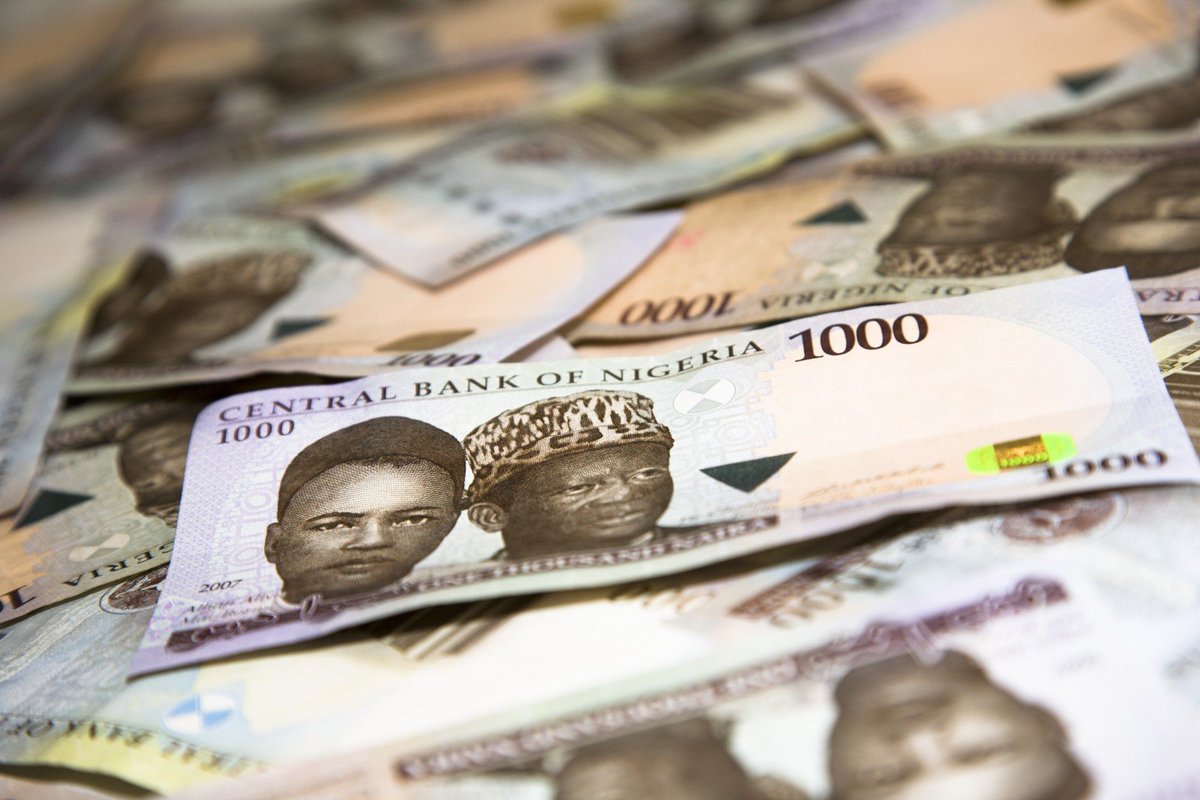
Nigeria’s broad money supply has risen sharply in May 2026 to N129.21 trillion
from N124.99 trillion in April. According to the latest data from the Central
Bank of Nigeria(CBN), the improvement in money supply was driven largely
by an expansion in both banks’ foreign and domestic asset positions.
This, it said, underscores persistent liquidity growth in the financial system
despite the CBN’s tight monetary stance.
Broad money (M3), which captures the widest measure of money in circulation,
includes currency outside the banking system, demand deposits, savings and
time deposits, as well as foreign currency deposits. Its expansion indicates that
more liquidity is available within the economy, whether for consumption,
investment, or financial transactions.
According to the data, the increase represents a month-on-month rise of N4.22
trillion or 3.38 per cent. On a year-on-year basis, M3 also expanded from
N119.20 trillion in May 2025, pointing to sustained liquidity growth over the
past 12 months.
The expansion was primarily supported by gains in net foreign assets (NFA)
and net domestic assets (NDA), reflecting a broad-based build-up in the banking
system’s balance sheet.
Net foreign assets rose significantly to N26.95 trillion in May, up from N24.01
trillion in April, indicating stronger external asset accumulation within the
financial system. This increase suggests improved foreign currency inflows or
valuation gains on external holdings, which in turn added to overall liquidity
conditions.
At the same time, net domestic assets climbed to N102.26 trillion in May from
N100.97 trillion in April, reflecting continued expansion in domestic financial
operations. This includes growth in credit to the private sector, government
securities holdings, and other domestic financial claims held by banks.
The simultaneous increase in both foreign and domestic asset positions
highlights the dual engines driving money supply growth.
A breakdown of monetary aggregates showed that quasi-money, comprising
savings and time deposits, rose to N84.58 trillion in May from N81.22 trillion in
April. This suggests that a significant portion of liquidity remained within the
banking system in interest-bearing accounts rather than being held as cash.
Currency in circulation and demand deposits also contributed to the overall
increase in narrow money (M2), which stood at N129.20 trillion in May, up
from N124.98 trillion in April.
Conversely, the rise in money supply occurred despite the CBN maintaining a
restrictive monetary policy stance. At its 305th Monetary Policy Committee
meeting, the apex bank retained the Monetary Policy Rate (MPR) at 26.50 per
cent alongside other key policy parameters. The decision was aimed at
sustaining disinflation efforts and anchoring macroeconomic stability amid
persistent price pressures.
However, the continued growth in monetary aggregates suggests that liquidity
conditions remain relatively accommodative, potentially complicating the
central bank’s inflation management efforts.
Financial analysts often view rapid money supply expansion as a precursor to
inflationary pressures if not matched by corresponding output growth.
The rise in both foreign and domestic assets also points to evolving dynamics in
Nigeria’s financial system, where external inflows and domestic credit
expansion are jointly shaping liquidity conditions.
Going forward, the MPC will closely monitor these trends as it balance the dual
objectives of supporting economic growth while containing inflation and
stabilizing the exchange rate.