


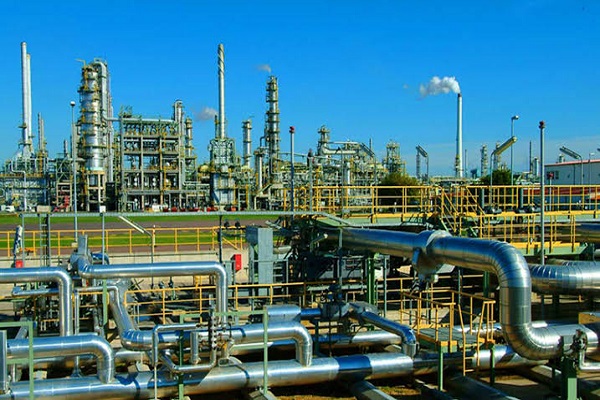
An estimated three billion tons of unmined iron ore deposits are explicitly earmarked by the Federal Government to feed the Ajaokuta Steel Rolling Complex in Kogi State once it becomes fully operational.
The Director-General, National Steel Raw Materials Exploration Agency (NSRMEA), Kolawole Michael, disclosed this while assessing the nation’s readiness and raw material availability ahead of the steel plant’s anticipated resuscitation.
The decision to retain the massive reserves, he said, aligns with President Bola Tinubu’s directive to halt the economic bleeding caused by exporting raw, unprocessed solid minerals.
The President has repeatedly condemned the exploitation of Africa’s critical minerals, advocating for a united continental front to ensure African nations derive maximum jobs, technology, and economic value from their wealth.
“President Tinubu has emphasised that simply identifying Nigeria’s natural resources—including iron ore, coal, limestone, gold, lithium, and tin—does not build factories or create jobs,” the NSRMEA boss noted.
Despite the premium quality of the iron ore discovered in Itakpe—which Michael described as having “no equal, both in quality and in quantity”—the abundance of the mineral remains locked in the ground due to the dormancy of its primary consumer.
“The abundance of iron ore in Itakpe cannot be mined right now because there are no off-takers like the Ajaokuta Steel plant, which requires a significant portion of these raw materials to roll steel,” Michael explained.
Detailing the original Master plan, Michael noted that the steel sector value chain was meticulously designed as an interdependent ecosystem.
“When the initiative to develop the steel sector was put together, everyone was given responsibilities. The steel raw materials agency was to explore, Itakpe was to mine, and Ajaokuta was to process and produce the steel,” he said.
Historically dependent on crude oil, Nigeria is making systematic moves to diversify its economy from a monolithic model to a broad-based industrialized nation. This journey began with an intensive exploration blueprint executed in partnership with foreign experts.
In the designed plan for exploration and building of the steel plants, the Federal Government had effective collaboration with the Russian government, who came in and worked with geologists in this agency, leading to identifying the iron ore in Itakpe, now called the National Iron-Ore Mining Company (NIOMCO),” he stated.
Laboratory tests have confirmed that Itakpe’s iron ore is the “flagship of steel development in Nigeria,” boasting exceptionally low impurity levels.
However, steel production requires a precise recipe. According to the Director-General, iron ore constitutes about 95 per cent of the raw materials needed, while limestone and coal make up the remaining five per cent. Because Ajaokuta has not yet taken off, the agency has temporarily licensed its limestone deposits to local cement manufacturers to prevent economic stagnation.
A major missing link in the value chain remains local, high-grade coking coal to power the rolling plants. While large deposits have been found in Obi-Lafia, Nasarawa State, the agency requires further exploration to refine it.
“There is coal in Obi-Lafia, Nasarawa State, found in large quantities, but the impurities must be extracted because the less harsh content, the better for production. We have to establish the mineability of this coal so we can reduce coal importation to Nigeria. We are asking the government to help us commence this exploration,” Michael stated.
The driving force behind the country’s recent geological successes is the government’s Early-Stage Mineral Exploration and Research Grant Endowment (EMERGE), an initiative designed to de-risk the mining sector and unlock an estimated $750 billion in untapped mineral wealth.
To bridge the final gap, the Minister of Steel Development, Abubakar Audu, is engaging international partners and courting Foreign Direct Investment (FDI) to bring modern technology into the sector.
However, Michael warned that the NSRMEA requires a critical funding boost to adequately fulfill its industrial mandate. To transition from prospecting to active production, the agency needs to modernize its infrastructure.
“We have a standard laboratory. You must have all these because if you go into the field to search for a material, you must subject it to laboratory tests to know its viability. The agency now requires adequate funding to run its mineral exploration, especially in equipping its laboratory and acquiring upgraded technology, like drones, to cover vast areas of prospecting,” Michael said.