


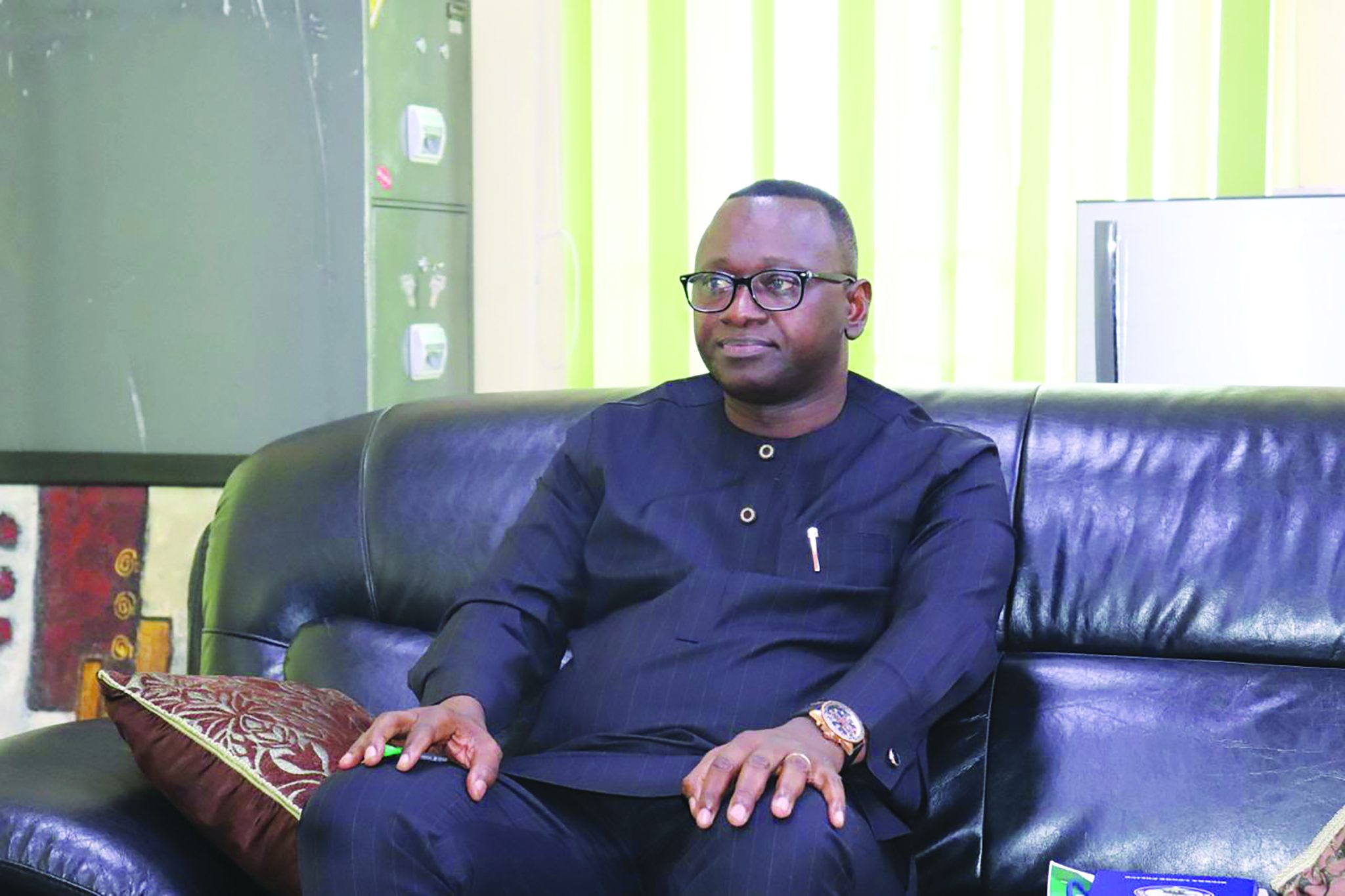
In the informed opinion of Finance Minister Sheku Ahmed Bangura, the news out of Sierra Leone is no longer the old, oft-repeated story of governance challenges, epidemics, enduring poverty, and odious debt.
Six years of President Julius Maada Bio’s New Direction Agenda, lately featuring the Big Five Game Changers and detailing priority areas for policymakers and implementers alike, have rendered the previous narrative for the West African country obsolete. In a comfortingly reassuring manner, Bangura says the Sierra Leonean economy has shown commendable resilience. While acknowledging that his country is in “a better position” today, he is quick to recognise lingering economic and fiscal challenges. Minister Bangura speaks about the tough reform measures and difficult policy initiatives the Bio administration is employing to get Sierra Leone to its current impressive position. A Mineral Wealth Fund was recently inaugurated to better manage the country’s strategic mineral resources, with the honourable minister as Chairman of the Board of the Sierra Leone Mines and Minerals Development and Management Corporation. The country is not only applauded at home for achieving macroeconomic stability and demonstrably developing the economy, but it is also deeply revered in international circles with important roles in the United Nations, the African Union, and the Economic Community for West African States. A good run through the excerpts relayed hereunder will furnish the reader with a fairly broad view of this West African country’s impressive showing at home and abroad, even in this period of global uncertainties.
Sierra Leone is projected to grow at 4.5% in 2025 and 4.7% in 2026. What are the growth drivers, and how sustainable are they?
After several challenging years marked by the COVID-19 pandemic and global economic shocks, the country’s macroeconomic and microeconomic indicators are demonstrating a positive trend, with electricity on the cusp of becoming sustainable. According to the International Monetary Fund (IMF), our economy is resilient, with projected growth of 4.5% in 2025 and 4.7% in 2026. This growth is expected to be fuelled by robust reforms in the mining, agriculture, and services sectors, as well as government-supported infrastructure projects designed to promote inclusive growth and enhance productivity. We are optimistic about a prosperous future for Sierra Leone. Moreover, investments in clean and sustainable energy are being prioritised through partnerships with the private sector and the introduction of initiatives like the FEED SALONE programme, economic diversification efforts, mining and industrial policies, and domestic revenue mobilisation. Additionally, our commitment to fostering entrepreneurship, human capital, innovation, and digital skills stands firm. These strategic efforts will not only create more opportunities for young people but also help us navigate global economic challenges. These actions signal a strategic approach to achieving sustained growth and stability. The creation of the Mineral Wealth Fund (MWF) is crucial for economic growth and sustainable development, as it is geared towards optimising mineral resources for the benefit of the citizenry. It represents a strategic approach to ensure that the nation’s mineral wealth translates into tangible prosperity and progress.
To what extent do you believe Sierra Leone’s economy is resilient against the backdrop of trade tensions, geopolitical instability, and other challenges?
Our fiscal consolidation and macroeconomic reforms, paired with improved public financial management, are yielding positive results that support macroeconomic stability while safeguarding social spending on education, healthcare, and social safety nets. The economy’s growth trajectory remains promising, with a projected growth rate of 4.5% in 2025 and 4.6% in 2026, despite rising geopolitical uncertainties, trade tensions, and various domestic and external challenges. The economy has shown resilience by withstanding multiple shocks while exploring avenues to unlock significant potential for economic transformation. In 2023, the GDP was rebased to USD 8 billion, up from USD 4 billion, with the services sector’s share rising to 42% from 33%, while that of agriculture fell to 30% from over 50%, indicating a structural shift in the economy. Economic growth is consistently projected at 4.5% for 2025. Inflation has drastically decreased from 47.4% in January 2024 to 5.9% in August 2025. However, fiscal pressures persist, driven largely by high debt service payments and energy subsidies in the midst of lower-than-projected domestic revenues. Through comprehensive economic policy initiatives and a supportive environment, we aim to accelerate investments in productive sectors and effectively allocate resources—human, natural, fiscal, business, and financial—to sustain robust growth despite global challenges. Overall, Sierra Leone is making strides in macroeconomic policy management and fostering strong partnerships despite global economic pressures and climate-related shocks.
What pro-growth policies are being implemented to make the economy more inclusive and resilient to external shocks?
Under President Bio’s leadership, Sierra Leone has made significant strides in improving the lives of many Sierra Leoneans. The economy is on a recovery trajectory, marked by single-digit inflation, a stable foreign exchange rate, a 158% rise in container imports, and increasing export receipts. The focus has been on pro-poor initiatives aimed at enhancing the people’s welfare and livelihoods, including cash support for 11,000 elderly individuals and training for thousands of youths, providing them with boats, agricultural tools, and car wash services. Living conditions have improved due to reduced prices for staple foods, and increasing purchasing power. Gender inclusion is notable with 30% women’s representation in government and policies permitting land ownership for women. Additionally, digital connectivity has expanded, with over 90% cell phone penetration and broader internet access, promoting financial inclusion. The education sector also has improved significantly, with over 1.5 million additional learners enrolled, achieving 94% gender parity at the primary school level. More than 527,000 learners accessed foundational learning materials, and 257,000 pupils benefited from the free school feeding programme. Additionally, 220 new school quality assurance officers were deployed to improve learning outcomes, 1,500 classrooms were constructed, and there was increased representation of girls in higher education alongside the establishment of more universities. President Bio is committed to infrastructure development, exemplified by the Sierra Leone Integrated and Resilient Urban Mobility Project, which focuses on enhancing public transport, road safety, and climate resilience. Other projects include the construction of a new airport, hospitals, bridges, and quality roads. His Excellency prioritises boosting food production, developing human capital, and implementing youth employment schemes to promote sustainable development.
As part of President Julius Maada Bio’s Feed Salone initiative, the Sierra Leonean government has made significant investments in livestock and cassava value chain development projects. Could you give us an insight into the projects and expectations from them?
President Bio has successfully combined vision with practicality since assumption of office in 2018 with the Free Quality Education initiative. He is now focusing on agriculture through the “Feed Salone” programme, which promotes partnerships, investments, innovation, and technology to foster economic diversification. We will prioritise this initiative in the Medium-Term National Development Plan, aiming to create a robust, private sector-led food production system and transform the agricultural value chains. The President views the Feed Salone programme as a national commitment beyond agriculture, aiming for self-sufficiency in food production. This initiative empowers youth and farmers, creates jobs, and promotes self-reliance, with over USD 800 million pledged for agriculture, including USD 205 million for livestock, cassava, and rural road development.
Sierra Leone’s Medium-Term Development Plan prioritises human capital development by improving education quality and aligning skills development with market demands. How would you access the progress made thus far?
One of the most enduring hallmarks of President Bio’s administration is the Free Quality Education Programme, with 20% of the national budget allocated to the education sector. This initiative has significantly expanded access for millions of Sierra Leonean children, particularly from disadvantaged backgrounds, and aims to transform the nation by developing a globally competitive workforce. Human capital development is essential for the well-being and future of Sierra Leone, serving as a cornerstone for resilience and inclusive growth. Investments in education, healthcare, and nutrition are fundamental for fostering a prosperous and equitable Sierra Leone. We have expanded nationwide facilities for tertiary, technical, and vocational education, focusing on reskilling and entrepreneurship training, especially for youths and women, thereby strengthening middle workforce development. Investment in education and skills training has stimulated inclusive and sustainable economic growth, fostering innovation, entrepreneurship, and the development of a competitive, productive workforce. Moreover, His Excellency’s initiatives in education and healthcare have significantly improved accessibility and quality of services, with the Free Quality Education programme resulting in increased school enrolment, including child-mothers, while vocational institutes offer skills training opportunities for adolescents to foster self-reliance.
As part of the strategic measures to tackle the challenges in Sierra Leone’s energy sector, the Bio-led administration has embraced the Mission 300 Project with optimism. What drives the administration’s optimism about the prospects of this project?
Following Sierra Leone’s qualification for the second cohort of countries to join Mission 300 in January this year, the country presented its draft compact to the World Bank Group (WBG), the African Development Bank (AfDB), and other partners at the IMF and World Bank’s Spring Meetings in Washington, D.C. While recognising that we are in a better position, we face challenging economic and fiscal conditions affecting the energy sector and aim to make a significant impact to change the narrative. Sierra Leone is fully committed to addressing the energy challenges it faces. In this regard, we have outlined a national compact to achieve 80% energy access by 2030, up from the current 36%. The compact focuses on diversifying Sierra Leone’s energy sources by increasing the share of renewables and attracting investment. Key targets for Sierra Leone’s Mission 300 include raising renewable energy’s share from 46% to 61%, increasing installed capacity from 271 MW to 1.28 GW, and expanding clean cooking access from 1.5% to 25%. Additionally, we aim to boost private sector capital from $615 million to $1.9 billion. Sierra Leone’s Mission 300 national compact is based on five key pillars: expanding generation and investing in competitive, reliable infrastructure; leveraging regional integration to reduce supply costs and enhance energy security; promoting Decentralised Renewable Energy (DRE) and Clean Cooking Solutions; incentivising private sector participation and derisking investments; and strengthening the financial viability and governance of utilities. To transform our energy systems, we will need consistent reforms, prioritisation of actions and finances, and a politically bold establishment. The energy sector poses a significant fiscal risk to the national budget, diverting critical resources away from essential social spending. We see Mission 300 as a positive “reset” in efforts to garner support for the country’s energy transformation. It serves as a vital resource for both the AfDB and the WBG to secure additional resources while building on existing foundations in the sector.
As Chairman of the Convergence Council of Ministers and Governors of Central Banks for the West African Monetary Zone (WAMZ), what are the challenges of the proposed Single Currency Programme, and how feasible is the new 2027 deadline?
As the Economic Community of West African States (ECOWAS) aims to establish a monetary union and a single currency by 2027, it is undertaking coordinated efforts to create a unified and resilient economic bloc that can better withstand external shocks and benefit its people. All necessary arrangements have been made to provide strategic direction for regional monetary integration and macroeconomic coordination, aiming to launch the ECO, the proposed single currency for the sub-region, by 2027. This single currency is critical for the sub-region, especially for tackling regional challenges and aligning policy decisions with ECOWAS’ long-term integration goals. Key aspects include achieving macroeconomic convergence, implementing the ECOWAS Single Currency Roadmap, and focusing on policy and statistical harmonisation, as well as the development of institutional and legal frameworks. Progress is evident in the planning and implementation of the single currency, driven by member states’ political will. Key advancements include regional digital payment systems, financial sector reforms, and preparatory measures for adopting the ECO, such as a flexible exchange rate regime, inflation targeting monetary policy, and a federal model for the future central bank.
Given the challenges of rising inflation and volatile exchange rates impacting the West African Monetary Zone (WAMZ) and other ECOWAS member states, there is an urgent need for stronger regional coordination. Inflation and currency depreciation hinder intra-regional trade, investment, and purchasing power. To overcome these issues, it is critical to strengthen our commitment to regional integration and economic transformation, facilitating evidence-based dialogue and coordinated actions towards achieving the ECO single currency. As chairman of the Convergence Council of Ministers and Governors of Central Banks for the West African Monetary Zone, I firmly believe that the ECO, a proposed single regional currency, will facilitate trade, reduce exchange rate volatility, and foster monetary stability and economic growth among the ECOWAS member countries. Its successful implementation would mark a significant milestone in Africa’s regional integration.
The World Bank recently launched two analytical reports — the Country Economic Memorandum (CEM) and the Country Climate and Development Report (CCDR) — providing insights into Sierra Leone’s economic and climate challenges. How would you appraise the focus of those reports?
The World Bank’s reports for Sierra Leone highlight key economic and climate challenges while proposing strategies for sustainable growth and resilience. The CEM emphasises the interconnected economic challenges in Sierra Leone and the need for ambitious reforms. It presents a roadmap for sustainable development that leverages the country’s resources and potential for economic growth, aiming to create jobs for the growing workforce. To tackle these challenges, the report suggests a growth strategy centred on mining, agriculture, agro-processing, and labour-intensive sectors.
Key recommendations include restoring macroeconomic stability through fiscal consolidation and better debt management; reassessing the state’s role regarding state-owned enterprises and investing in climate-resilient infrastructure; enhancing private sector capability through improved infrastructure and credit access while reducing foreign investment barriers; and developing human capital by improving education quality and aligning skills with market needs.
On the other hand, the CCDR analyses Sierra Leone’s socio-economic development prospects in relation to climate change, emphasising its effects on agriculture, infrastructure, and the economy. Sierra Leone ranks among the 15 most climate-affected economies globally, with expected temperature increases and erratic rainfall patterns threatening agriculture and infrastructure. These challenges could potentially lead to GDP losses of 9-10% by 2050. Economic impacts include reduced labour and crop productivity, as well as increased maintenance costs due to flooding. Additionally, poverty and inequality are also projected to worsen, endangering nearly 600,000 more individuals by 2050.
To enhance climate resilience and mitigate these threats, the report recommends three strategies: investing in resilient infrastructure and renewable energy for sustainable development; promoting climate-smart agriculture through better policies and technologies; and strengthening social resilience through improved health systems and expanded social protection. Implementing climate actions requires significant financial resources, which can be sourced from domestic taxes, green private sector investments, and international support.
The reports emphasize strategies for enhancing resilience and sustainability by aligning growth initiatives with climate priorities for long-term progress. They project significant macroeconomic growth rates of 4.5% for 2025 and 4.7% for 2026, despite global economic challenges and climate disruptions.
President Bio has assumed chairmanship of the Economic Community of West African States (ECOWAS), becoming the first Sierra Leonean Head of State to hold this position. Can you give us a glimpse into how his leadership style would help make a positive impact across the sub-region?
President Julius Maada Bio, the chairperson of ECOWAS, has committed to restoring constitutional order and deepening democracy in West Africa. Having transitioned to civilian leadership after his 2018 presidential victory and re-election in 2023, he takes the helm during a challenging time, especially with the withdrawal of Mali, Burkina Faso, and Niger from the ECOWAS, forming the Alliance of Sahel States. President Bio’s leadership will be crucial in restoring constitutional order, deepening democracy, revitalising regional security cooperation, fostering economic integration, and boosting institutional credibility amidst the region’s volatility. His recent visits to ECOWAS states underscore his commitment to unity, peace, and progress in the region. As chairman of ECOWAS, President Bio not only represents Sierra Leone but also fosters ties that are beneficial to all citizens. His emphasis on peace, security, and stability reflects his vision for Africa’s future.