


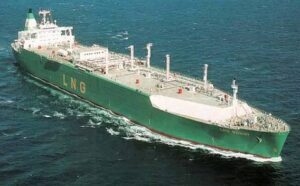
 UTM Offshore says it is on track to take a Final Investment Decision on Nigeria’s first floating LNG project in September, paving the way for construction to begin in the first quarter of next year.
Group Managing Director of UTM Offshore, Julius Rone said the project will support gas monetisation, reduce gas flaring, strengthen domestic Liquefied Petroleum Gas supply and position Nigeria as a more attractive destination for energy investment.
UTM Offshore said it is aiming to take a final investment decision in September on what would become Nigeria’s first floating liquefied natural gas project, marking a key step for a development the company says could unlock stranded offshore gas, curb flaring and strengthen domestic fuel supply.
Rone said the project now has financing in place, giving it the momentum needed to move from agreements and contracting into execution. “Today is a great day for not just Nigeria, for the world, because in signing this gas agreement underpins that this project can proceed into the next stage,” Rone said, adding that the deal creates the certainty needed to advance the project through final investment decision, financing closeout and construction. According to him, UTM Offshore is working toward an FID in September, with additional milestones planned before year-end.
He said the company expects to sign the gas supply agreement and the engineering, procurement, construction, installation and commissioning contract before Christmas, allowing construction to start in the first quarter of next year.
The timeline is significant for Nigeria’s gas sector, which has long struggled to monetize substantial offshore resources, much of them stranded due to limited infrastructure. Floating LNG, or FLNG, is designed to process natural gas at sea, directly at or near the field location, allowing companies to liquefy and export gas without waiting for extensive onshore pipelines and processing plants.
Rone framed the project as a strategic response to that challenge. Nigeria, he said, has “a lot of gas resources that are stranded offshore,” while FLNG offers a proven way to process gas where it is produced, export volumes meant for international buyers and channel some products back into the domestic market.
One of the clearest local benefits cited by UTM Offshore is liquefied petroleum gas supply. Rone said more than 300,000 tons of LPG would be brought back into Nigeria to support the domestic market. That could help reduce the country’s reliance on imported LPG while expanding access to cleaner cooking fuel for households.
The domestic angle is increasingly important as Nigeria seeks to widen the use of gas under its broader energy transition strategy. LPG is seen as a cleaner alternative to traditional biomass fuels commonly used in homes, and wider penetration could help reduce indoor air pollution and deforestation.
Rone argued that the project could therefore generate both industrial and social benefits. By improving LPG availability, he said, the development would support cleaner cooking adoption and help move households, particularly women in rural and underserved communities, away from more polluting and less efficient energy sources.
UTM Offshore also cast the project as an environmental play, particularly in relation to gas flaring. Rone said part of the gas earmarked for the project is currently being flared, meaning the FLNG facility would capture gas that might otherwise be wasted and process it into LNG and LPG instead. “That automatically you’re saving the environment,” he said.