


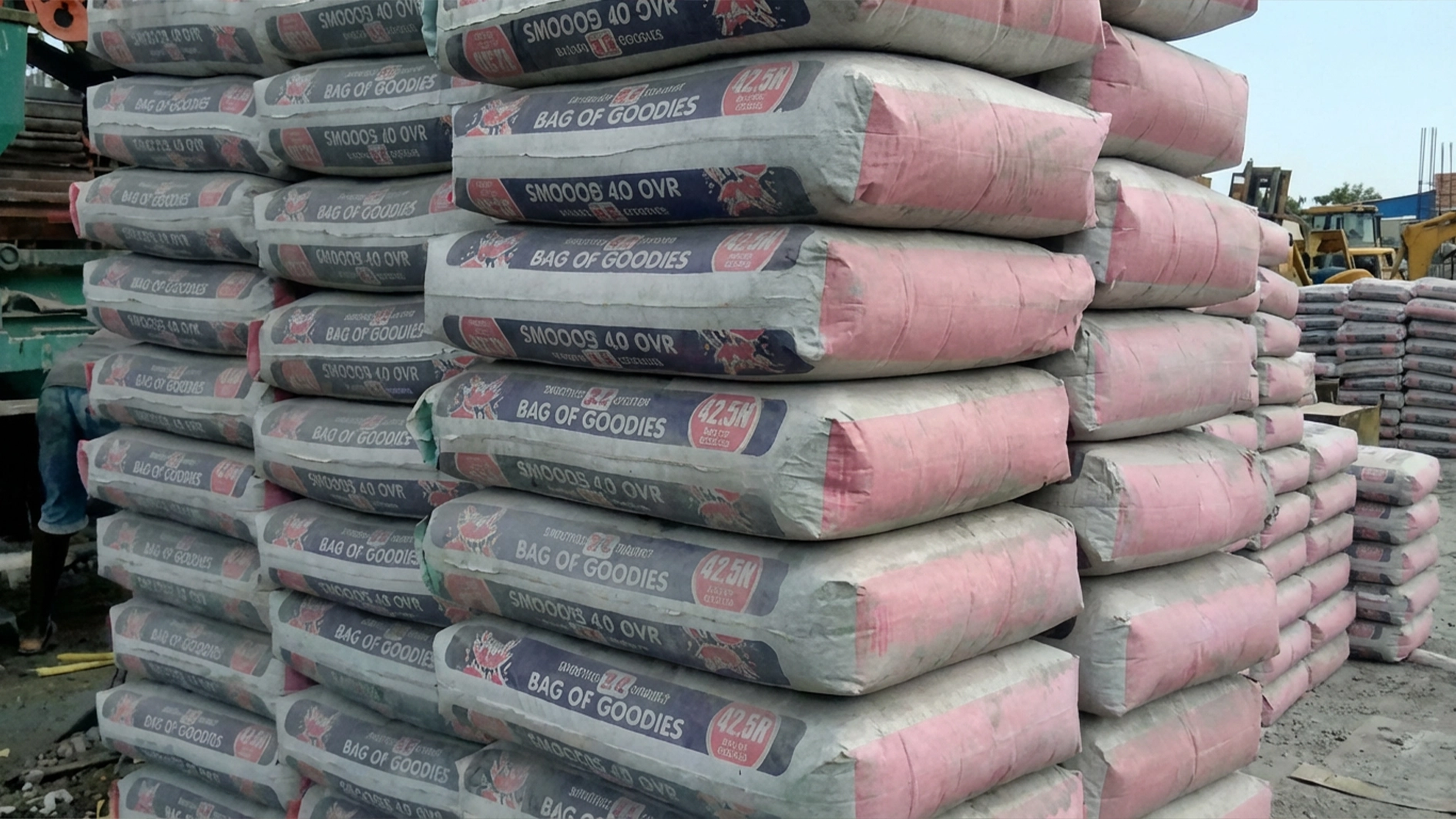
*Local cement price in Nigeria nearly doubles Africa’s average*
Despite Nigeria’s local production capacity of over 60 million metric tonnes yearly, one of the highest on the continent, indigenous consumers continue to pay one of the highest cement prices – almost twice the average in other countries.
The industry is dominated by three companies – Dangote Cement, BUA Cement, and Lafarge Africa (recently rebranded as HBM Nigeria Plc), with installed cement production capacity estimated at 60–65 million metric tonnes per year. With new plants coming on stream, the national capacity could rise to about 85 million tonnes yearly in the coming years.
Actual domestic consumption is around 25–30 million tonnes per year, meaning Nigeria produces more cement than it currently uses and exports the surplus to neighbouring countries.
In markets across major cities, including Abia, Lagos, and Abuja, a 50-kilogramme bag of cement typically sells between N12,500 and N15,000, depending on location and distribution costs.
A continental comparison shows that the local rate is higher than the cement price in several African countries, despite Nigeria’s supply glut.
In South Africa, where the cement industry is competitive and supported by efficient logistics, a 50kg bag of cement averages between N6,000 and N7,000. In Egypt, one of the world’s largest cement producers, prices could fall to the equivalent of N4,000–N5,000 per bag, largely due to surplus capacity and lower production costs. In Kenya, cement sells for about N6,500–N7,500 per bag, while in Ghana, prices typically range between N7,000 and N8,000 per bag, depending on exchange rates and imports.
Market insights show that Dangote alone controls more than half of Nigeria’s cement production, with an installed capacity of about 35–35.3 million tonnes per year across Obajana, Ibese, Gboko and Okpella plants. The estimated capacity will exceed 41 million upon completion of the new plant in Itori, Ogun State.
BUA Cement is currently the second-largest producer, with an installed capacity of about 17–20 million tonnes per year. Its major plants are in Obu, Edo State, and Sokoto (Kalambaina), while a new line is planned in Edo State. Lafarge Africa has an installed capacity of about 10.5 million tonnes per year, with plants at Ewekoro and Sagamu in Ogun State, Ashaka in Gombe State and Mfamosing in Cross River State.
Several new plants are also underway. These include MSM Cement in Kebbi State, with a planned capacity of three million tonnes per year, and Resident Cement in Bauchi State, with a proposed capacity of 10 million tonnes per year.
The three firms generated over N6.53 trillion in revenue in 2025, while their combined after-tax profit reached about N1.65 trillion, representing a 142 per cent increase from 2024.
For critics, these profitability figures raise questions about whether Nigerian consumers are paying more than necessary for a product produced locally at scale.
Manufacturers, however, argue that cement production in Nigeria is far from cheap. Cement plants require enormous amounts of energy, and producers rely heavily on gas, coal, alternative fuels and diesel to power kilns and generators. With the removal of fuel subsidies and rising energy prices, production costs have surged. Although most raw materials, such as limestone, are sourced locally, manufacturers still import equipment, spare parts, refractory materials, packaging materials, and some additives. The depreciation of the naira has sharply increased these costs.
They also point to logistics and infrastructure challenges. Nigeria’s major cement plants are located far from some key consumption centres. Industry estimates suggest that logistics alone can account for 30 – 40 per cent of the final retail price of cement.
According to the producers, rising labour costs, financing costs, maintenance expenses, and general inflation increase the overall cost of production and distribution, and they add that Nigeria’s housing deficit, infrastructure projects, and private construction keep demand high. “When demand remains strong, manufacturers have little incentive to cut prices.”
Ironically, Nigeria exports cement and clinker to neighbouring countries such as Ghana, Cameroon and Niger. While exports earn valuable foreign exchange for producers, they also reduce pressure to lower prices in the domestic market.
The high cement prices have far-reaching consequences for the housing and construction industry. Already, the Federal Government is feeling the pinch of the problem as the Minister of Works, David Umahi, recently urged producers to reduce their prices. He warned that the current cost of cement is making infrastructure projects difficult, and the government is being forced to continually adjust project contracts.
Umahi said the government would start formal engagements with cement companies from July 1, 2026.
He added that reducing cement prices would both support the delivery of infrastructure projects and benefit citizens who use cement for domestic construction projects. The minister also urged cement companies to increase their production capacity to support government projects.
Experts estimate that the country faces a housing deficit of more than 16 million units, and cement remains one of the most critical construction materials.
When cement prices rise, the cost of building houses, schools and infrastructure projects increases, placing additional pressure on both government budgets and private developers.
They argued that more competition through the entry of new manufacturers, including planned plants in states such as Ebonyi State, improved rail transport to reduce haulage costs, stable electricity supply and lower energy costs, stronger naira and improved access to foreign exchange for industrial inputs, as well as better market transparency and oversight to discourage excessive distribution mark-ups.
President of the Real Estate Developers Association of Nigeria (REDAN), Oba Akintoye Adeoye, said the high cost of cement remains one of the biggest obstacles to delivering affordable housing and infrastructure development. Other stakeholders have called for stronger regulatory oversight to ensure competitive pricing.
Executive Director of the Housing Development Advocacy Network (HDAN), Mr Festus Adebayo, urged the Federal Government to introduce deliberate policy interventions to make cement more affordable.
“Cement is a strategic material in housing delivery. If Nigeria is serious about tackling its housing deficit, policies must be introduced to ensure cement becomes more affordable and accessible for developers and individuals seeking to build homes,” he said.
HDAN also urged the Federal Government to consider policy measures to reduce the cost of cement production and improve market competitiveness. The group recommended concessionary energy support for cement manufacturers, improved gas supply to plants and stable electricity to reduce dependence on expensive diesel.
The advocacy network further called for duty waivers on critical equipment and machinery used in cement production, a move it believes would help lower operational costs and eventually reflect in reduced market prices.
Adebayo also emphasised the need to encourage competition in the cement industry by supporting new investors in establishing additional plants across different regions of the country. According to the organisation, increased competition could help moderate prices and expand supply.