


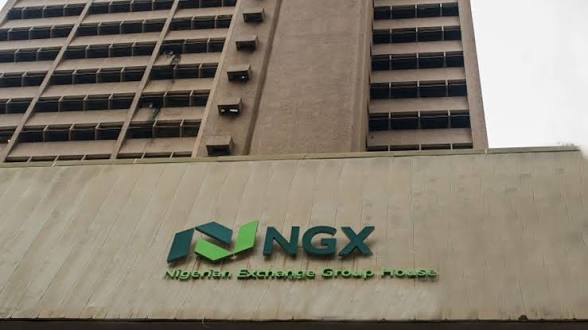
Nigeria’s equities market ended last week at a fresh record, with market capitalisation rising to ₦163.66tn as renewed investor activity following the country’s return to the FTSE Russell Frontier Market Index combined with strong gains in oil and gas stocks.
Market capitalisation rose by about ₦1.50tn, or 0.93 per cent, from ₦162.16tn on September 18 to ₦163.66tn on September 25. The NGX All-Share Index also gained 0.92 per cent to 252,113.41 points from 249,804.56 points over the five trading sessions.
The rally came as Nigeria returned to FTSE Russell’s Frontier Market classification on September 21 after being moved to “Unclassified” status in 2023. The reclassification followed improvements in areas including foreign exchange liquidity, capital repatriation and market infrastructure, while Nigeria’s transition from T+2 to T+1 settlement also supported the change.
The first session under the new classification saw the All-Share Index rise 0.14 per cent to 250,156.80 points, while market capitalisation increased to ₦162.39tn. Foreign and institutional investors targeted banking stocks, with Stanbic IBTC Holdings, United Bank for Africa and Fidelity Bank among the notable advancers.
However, the market’s advance was not driven by banking stocks alone. Trading broadened during the week, with 43 stocks gaining against 20 decliners on Wednesday as market capitalisation crossed ₦163tn for the first time. The market then recorded its biggest single-session gain of the week on Thursday, when capitalisation increased by ₦622.51bn to ₦163.68tn.
Oil and gas stocks were a major driver of Thursday’s advance, with the NGX Oil and Gas Index rising 3.95 per cent. Seplat Energy led the sector’s gains, with its shares rising 7.33 per cent to ₦16,000, pushing the company’s market capitalisation to about ₦9.6tn.
The record was slightly moderated on Friday as the market closed almost flat. The All-Share Index fell 0.015 per cent to 252,113.41 points, while market capitalisation declined by about ₦20bn to ₦163.66tn. Despite the marginal pullback, 39 stocks gained against 27 decliners, showing that buying interest remained spread across several equities.
The weekly performance reflected a combination of renewed foreign and institutional interest following Nigeria’s FTSE reclassification and strong gains in selected domestic equities, particularly energy stocks. Whether the renewed foreign interest will translate into sustained and broader market participation will become clearer in subsequent trading sessions.