


By Kelechi Deca
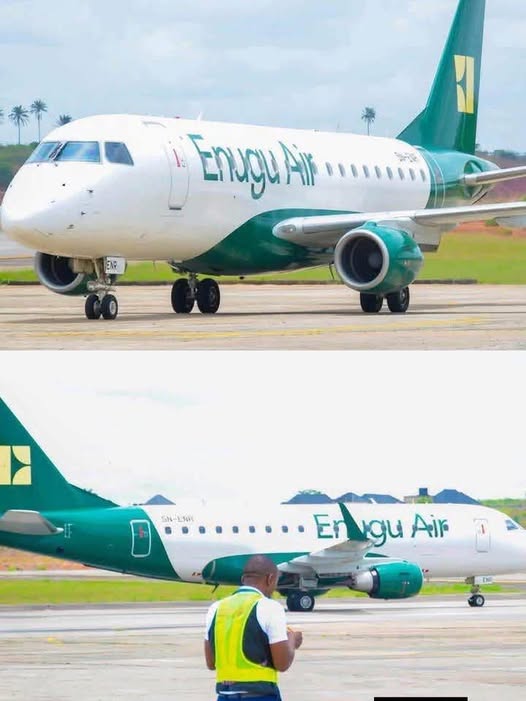
An Enugu Air Embraer aircraft with registration number 5N-ENR was involved in a runway excursion at the Benin Airport, Edo State. The aircraft from Lagos to Benin overran the end of Runway 23 during landing at about 3:10 p.m. local time on the 23rd of July 2026.
According to the National Safety Investigations Bureau (NSIB), there were 63 passengers and five crew members on board the aircraft, and luckily all occupants were safely accounted for and no injuries were recorded.
While waiting for the outcome of investigations and further information from the NSIB, NCAA and the Airline there are certain misconceptions or outright efforts at miseducation that needs to be addressed.
First, this is a developing story thus positions might shift. The official narrative for now is that it wasn’t a crash landing. That it was a Runway Excursion. So while we wait for the final investigation and also my own investigation we will go with Runway Excursions for now. A Runway Excursion is an event where an aircraft departs the runway surface, either by overrunning the end or veering off the side.
It is not an unusual occurrence because it is one of the most common and persistent threats in aviation, with landing accounting for about 80% of these events globally.
The causes are rarely isolated as they usually involve a combination of the following factors such as human errors, external factors like inclement weather conditions, and or equipment malfunction.
Human errors might lead to an unstable approach which can lead to high speed, high vertical speed, or improper configuration on final approach.
There’s also the issue of poor touchdown and deceleration. This leads to what aviators call “Long float” which is excessive distance from 50 ft to touchdown and delayed thrust reverser deployment are key triggers.
There is also a failure to Go Around. When an aircraft found itself in a continuing a destabilized approach instead of aborting the landing which requires a Go Around so it can have a second chance. Such may lead to an incident.
We also have factors outside the control of the Captain and chief among them is Contaminated Runway. When you have issues such as water, or other slippery substances on the runway, it can significantly reduce braking action.
Wind Conditions is another bid concern. Strong tailwinds, crosswinds, or gusty conditions make control difficult and increase stopping distance as some can push the aircraft speed independent of the Captain’s efforts.
An aircraft may also have malfunctions which may affect controllability or braking, such as asymmetric reverse thrust or tire failure.
My suspicions.
I am cautiously persuaded to believe this incident was weather induced. Heavy rains, zero visibility and probably absence of runway lights but where one exists, visibility may still be challenging.
What do we know about that particular aircraft?
The 5N-ENR involved in the Benin incident is an Embraer E170LR regional jet with manufacturer serial number (msn) 17000175. It previously flew internationally before joining the fleet of the state-backed Nigerian virtual carrier Enugu Air operated by XE Jet.
That aircraft was originally operated overseas under registration SU-GDH before being acquired via Egypt’s CIAF Leasing and formerly flown by EgyptAir Express.
It has a twin General Electric CF34-8E5 engines and was delivered on March 4, 2009 to EgyptAir Express, even though manufacturing date reads 2007.
It was later brought to Nigeria in early 2025 as part of Enugu State’s launch of Enugu Air, receiving the registration 5N-ENR.
It made its inaugural landing at Akanu Ibiam International Airport in Enugu in February 2026 after being painted and prepped in South Africa.
While this may have nothing to do with the incident, that aircraft that was involved is the oldest aircraft in the fleet of Enugu Air as it was manufactured 2007 making it 19 years in service.
The average age of the aircraft in the fleet of Enugu Air is 18 years. The youngest on the fleet is an Embraer ERJ195 with registration number 5N-ENQ. It is important to note that Enugu Air is not operating the oldest fleet in Nigeria. The most important thing is whether the equipment is in great condition.
The average age of the global commercial passenger aircraft fleet is approximately 14.8 years, driven higher in recent years by manufacturing delays and supply-chain constraints.
The world’s top three biggest airlines Delta Air Lines averages 15.43 years, American Airlines averages 14.12 years, and United Airlines averages 16.05 years.
The typical lifespan of a passenger aircraft are between 25 and 30 years of age when they’re retired or decommissioned. But in aviation, age is a number.
Just last week, some of us where shocked to learn that two nearly new Boeing 737 MAX 8 jets operated by GOL Linhas Aéreas were grounded and sent for scrapping after less than five months in service due to recurring engine and balance defects.
The aircraft were delivered in September and November 2025; grounded by early February 2026 after flying under five months. And they were flown to Pinal Airpark in Marana, Arizona, in March 2026 for complete teardown and recycling.
The oldest active commercial passenger jet in regular service is a Boeing 737-200C operated by Nolinor Aviation, which is over 51 years old (built and first delivered in 1974). Also, a Douglas DC-3 rugged piston-engine airframes built in the 1930s and 1940s still occasionally fly scheduled or charter passenger runs in remote areas like Alaska and South America.
In aviation, prompt quality maintenance is everything.