


There is a new wave of interest in Africa’s mineral resources. The continent is endowed with 30 per cent of known global mineral reserves, which now drives on-going global energy transition and much of the world’s industrial development. Yet, over the years and since the colonial times, most analysts believe that what African countries have endured and celebrated as “investment” on the continent has been nothing but pernicious exploitation.
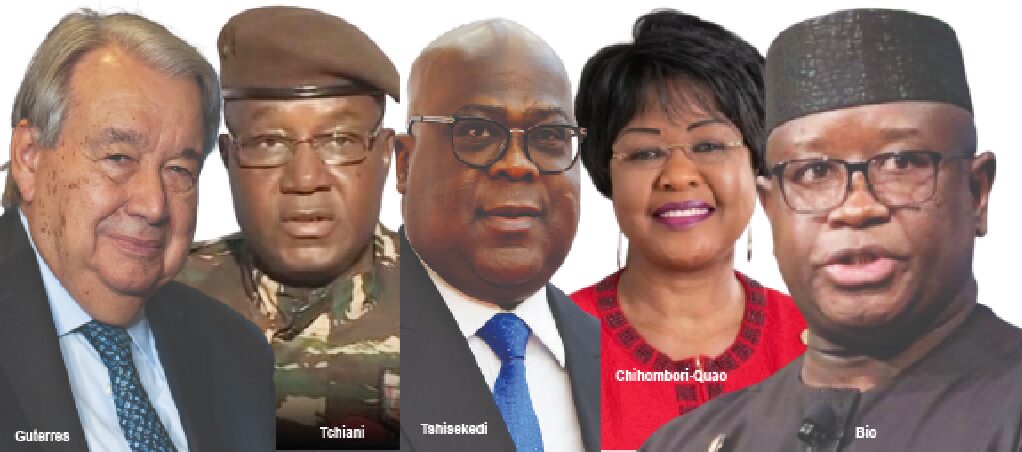
In February 2026, during a bold, unprecedented address at the 39th Ordinary Session of the African Union Heads of States and Governments Assembly, the United Nations Secretary-General, Antonio Guterres, called on the world to end the “plundering” and “exploitation” of Africa’s critical mineral wealth.
Analysts say it might be the UN scribe’s considered response to former African Union Permanent Representative to the United States Dr Arikana Chihombori-Quao’s personal challenge to him to do and say something about the blatant, unending pilfering of African countries’ assets, including mineral resources, by Western interests, China, and other developed economies in Asia and the Middle East.
The African Union’s Commissioner for Trade and Industry, Albert Muchanga, has added his voice to the conversation. He urged all stakeholders in Africa’s mining sector to ensure that proceeds benefit subsequent generations, not just foreign exploiters.
Nigeria’s President Bola Tinubu is equally assertive. He called on his peers to combat exploitation and pledged to lead the task for the realisation of value from the continent’s resources. On his part, Mali’s President Assimi Goita demanded reparations for the historical and ongoing extraction of mineral resources by the developed economies.
Africa’s mineral resource rape
To say that Africa is currently being raped of its mineral resources is to put it mildly. The exploitation is so lacking in a “human face” that the First Lady of a mineral-rich African country was constrained to publicly lament the disparity between the enormous profits reaped by foreign companies from the continent’s mineral resources and the meagre returns those African countries receive in return.
The resource rape is so economically destructive that if African countries got just a quarter of the value due to them, they would not need the rigged developed-world “aid” designed to get them bogged down in odious, unsustainable debt. After all, according to the Africa Finance Corporation (AFC), Africa’s known stock of mine-site minerals is reckoned to be worth a staggering $29.5 trillion, more than enough to make the continent the mythical paradise on earth.
Various sources readily agree that Africa should have no business with poverty since minerals account for 70% of exports and 28% of GDP, as the African Development Bank asserts. The continent alone has 90% of global chromium and platinum deposits, 85% of manganese, 70% of cobalt, and 12% of oil, without mentioning such precious minerals as gold, diamonds, and uranium.
Controversy rages over the veracity of a viral news item on the sheer economic evil perpetrated by Western mining companies in Africa. One such story tells how France’s Orano, a uranium mining company, paid the Republic of Niger, a poor African country, a measly 0.80 euros per kilogramme of uranium while earning 200 euros per kilogramme from sales to its developed country peers! While this may contain events of mere rumour or exaggeration, as some Western media and authorities have responded, it is quite instructive that it had some level of credence. Niger has since taken over control of its uranium wealth and sent the overbearing exploiters packing! More credible, incontestable reports say Niger has been chalking up $3 billion in annual returns from its uranium deposits, where it once reported less than $500 million — a huge leap!
Dr Chihombori-Quao, who has made a name by consistently calling out Western imperialist countries’ penchant for the unconscionable “stealing” of Africa’s resources, has helped to awaken the world to Africa’s plight. She has drawn global attention to all manner of ruses employed by foreign corporations and imperial nations, notably France, to deny African countries their rights and access to legitimate ownership of material and financial assets and to cheat them. In her latest exposé, she called out leaders of developed countries who tolerate the activities of their corporations, which build secret runways all over mining sites in the Congo, Northern Nigeria, and elsewhere for landing “pirate” aircraft evacuating stolen gemstones and illegal minerals.
In the words of another civil rights activist, Shahid King Bolsen, on a viral social media post, “African countries have no control over their wealth. Western corporations, with the backing of their home governments, own the mines, do the extraction, set the prices, choose the markets, and ensure that the wealth doesn’t benefit the communities and countries in whose soil the minerals sit.”
How? He explains: “They fund proxy wars and conflict and support and arm rebel insurgencies to create instability and weaken governments through blatant coups d’état in mineral-rich countries like the Democratic Republic of Congo (DRC), the Republic of Niger, and Northern Nigeria.” In Nigeria, foreign companies have been accused of colluding with local leaders to hire armed groups such as bandits and terrorists to protect them and to take control of mineral-rich land. This done, the mineral resources are open for massive exploitation without accountability or regard for not just the economic welfare of the country and indigenous communities but also the safety of their environment, as the soil, river, and water table degradation in Nigeria’s oil-rich Niger Delta typifies.
Dearth of requisite skill sets
Another major challenge facing the African mining sector is the dearth of requisite skill sets and technical know-how of most Africans, as most of the technology and requisite knowledge for extraction are majorly in the hands of foreigners and foreign interests. These technical experts sent to African mining communities by large corporations from countries like Australia and Belgium often arrive with colonial mindset to only exploit the continent without adding value or building local content. South Africa appears to have done much better than elsewhere in Africa because the miners still see themselves as Africans. To a large extent, the exploitation there is domesticated.
Breaking the “resource curse” cycle
It is quite illuminating that some countries in the Sahel region, including Mali, Niger and Burkina Faso, have had changes of government and breakouts from France’s unconscionable exploitation of their mineral resources and domination of their economies.
Sierra Leone is another African country that is transforming its mining sector from a “resource curse” into one of sustainable development and national empowerment. President Julius Maada Bio, determined to positively change the narrative of the country’s mining sector, is implementing bold reforms aimed at transitioning from a legacy of raw resource exploitation to transparent local value addition and indigenous ownership.
As at end-2025, the sector employed over 15,000 Sierra Leoneans, owing much to the people-centred, forward-looking policies of the President Bio administration.
In the same vein, Liberian President Joseph Boakai is reforming the mining sector by reviewing existing concession agreements, introducing a new Mining Code in 2026, and establishing a National Mining Company to increase state participation. The aim is to curb corruption and foreign exploitation and ensure better returns for the Liberian people. The administration is focusing on value addition, enforcing local content policies, and leveraging geoscientific data to secure stronger investment deals.
In Guinea, General Mamady Doumbouya, who has led the country since a 2021 coup and was sworn in as president on January 17, 2026, following a 2025 election victory, is implementing sweeping reforms aimed at reclaiming national sovereignty over the country’s mineral wealth. These reforms focus on enforcing local processing of raw materials, increasing state control, and ensuring fairer revenue distribution from Guinea’s vast bauxite and iron ore reserves.
In a major crackdown, the government revoked over 50 mining permits for companies that failed to comply with contractual obligations, particularly those neglecting local processing or leaving concessions idle. Doumbouya has mandated that foreign companies must build local bauxite refineries (alumina refineries) to stop the export of raw materials.
In Zambia, President Hakainde Hichilema is reforming mining sector to ensure that the country’s abundant natural resources are utilised not just for immediate gains but also for the creation of long-term wealth that benefits the people. Against this background, his administration has revamped the mining policy to align with global standards, ensuring competitiveness and stability. The Government’s target is triple the current copper output from 800,000 tonnes per year to three million tonnes within a decade. Hichilema is also implementing local content Statutory Instruments (SIs) to ensure that the mining sector contributes directly to local communities and that wealth is used to develop infrastructure, education, and health services nationwide.
President Adama Barrow of Gambia has equally embraced the current push by African leaders to bolster the mining sector. His administration is reforming The Gambia’s mining sector by transitioning it from a previously opaque system to a more transparent, investment-driven industry aimed at economic growth and job creation. Barrow has focused on opening up the country’s mining sector by inviting new, reputable investors to manage resources more profitably.
Africa’s “corrupt-leader narrative”
It is tempting to explain away the economic pillage of Africa as the doings of a long list of crass, corrupt leaders in the mould of Mobutu Sese Seko, formerly known as Joseph Mobutu of Congo.
Given that the first law of nature is survival, some were constrained to act corruptly by these external colonial powers to forestall removal from office and, worse, assassination, as suffered by the DRC’s first elected president, Patrice Lumumba, and a host of patriotic leaders after him. The unending greed of imperial developed powers and their resolve to keep Africa unstable and poor to enable continued exploitation are manifestly evident to this day in the DRC.
The recent inauguration of initiatives such as the African Continental Free Trade Area (AfCFTA) indicates the incipience of awareness on the continent. African think tanks challenge African leaders to seize control of their mineral resources to break the historic cycle of exploitation and, instead, foster economic growth, industrialisation, and prosperity. The overall aim is to ensure that the continent’s rich mineral resources power Africa’s development, not just for profit for the foreign corporations and the benefit of their home countries.
Consider the Lobito Corridor, a major United States-and European Union-backed infrastructure initiative developing a 1,300 km+ railway connecting Angola’s Lobito Port to the mineral-rich regions of the DRC and Zambia is a big deal. It is the West’s self-interested response and move to counter China’s Belt and Road initiative in Africa. Donald Trump’s administration recently offered to arrange a peace deal between DRC and Rwanda. The deal’s main purpose was to enable US’ easy access to minerals and rare earths for high-tech defence and green energy opportunities. Unfortunately, the peace deal, like the rail link is just the same old odious business of making African minerals available to the developed world. The rail aims to shorten export routes for critical minerals (copper and cobalt) from 45 days to seven. The project involves constructing new rail lines to the sea for easy exploitation of raw, unprocessed minerals. Nothing is said of investing in processing plants in any of the countries the lines traverse to provide jobs for their peoples or earn better revenues for their governments. Yet, the project is nebulously christened Partnership for Global Infrastructure and Investment (sic).
Taking charge
With the African Union’s African Green Minerals Strategy (AGMS) adopted in 2025, Africa may have finally woken up to the existential need to break the “resource curse,” which perversely correlates abundant resource endowment but wallowing in extreme poverty.
The union describes the strategy as a defining moment in the continent’s journey toward sustainable industrialisation, energy security, inclusive growth, and development. It is not enough, the pan-African body says, to hold significant shares of global minerals stock (including so-called green minerals and rare earth); the leadership of African countries must take charge (see box: African leaders taking charge) and use them to create lasting wealth through value addition “at source.”
The AGMS, along with its corollary, the African Mining Vision (AMV), hopes to fulfil the continent’s manifest destiny of prosperity by working toward sustainable mineral resource exploration and management. The grand goal is to make Africa’s mineral wealth contribute to a people-centred “broad-based socio-economic development.”
The United Nations, on its part, has been failing Africa. In addition to setting up war crimes tribunals to prosecute individuals for genocide and crimes against humanity, open-minded, forward-looking critics say it is time for the world body to set up tribunals to try these mineral resources exploiters who have been literally raping Africa just as some countries were forced to pay reparations for fomenting economy-damaging wars at the beginning of the 20th century.
Guterres, the UN scribe, may have opened up a new way forward by boldly speaking up against the injustice borne by African countries and peoples for centuries. He advocates a shift from the mere exportation of raw materials to the establishment of fair, sustainable value chains and manufacturing within Africa to create local jobs and ensure economic growth and inclusive, sustainable development worthy of the continent’s proven stock of wealth.
Box
African leaders taking charge
In the spirit of the African Union’s African Green Minerals Strategy (AGMS) and the African Mining Vision (AVM), a number of African leaders, using various means, are attempting to take charge of their countries’ mineral wealth.
Hereunder is a sample:
Burkina Faso: Under Captain Ibrahim Traore, the country has reportedly become a leader in this movement, taking over gold mines and ending the export of unrefined gold to prioritise domestic development.
Mali: Under the leadership of President Assimi Goita, Mali has updated its mining code to allow for increased state and local ownership. The government is also pushing for enhanced domestic value addition.
Tanzania: Since the era of President John Magufuli (2015- 2017), the Tanzanian authorities have been enforcing local processing and trade requirements for gold. Under the current President, Samia Suluhu Hassan, Tanzania’s mining sector is being reformed with the strengthening of state control and increasing local value addition.
Botswana: The country has “nationalised” its minerals sector. It currently runs its biggest diamond mine under Debswana, a 50-50 joint venture between the government of Botswana and the De Beers Corporation while simultaneously securing 15% in the latter’s parent company. Botswana also reserves the right to sell diamonds from other mines independently of Debswana or De Beers.
Botswana President Duma Boko has directed that no diamonds or copper concentrates will be exported raw, requiring all to undergo local beneficiation.
Sierra Leone: President Maada Bio’s administration has fundamentally restructured how miners operate in Sierra Leone. In a significant move to regain control over natural resources, the government established a 100% state-owned project company to operate alongside private entities, aiming to secure direct returns on national assets.
If there is one thing President Bio is determined to bequeath Sierra Leone, it is a thoroughly reformed mineral sector to aid the development of the country. This patriotic effort is, however, facing severe headwinds from age-long vested interests whose exploitative tendencies are diametrically opposed to the development aspiration of Sierra Leone.
Niger: Perhaps no country in Africa is more determined to take full ownership and benefit of its mineral resources than the Republic of Niger under General Abdourahamane Tchiani. Today, Niger asserts full ownership of all of the country’s mineral resources.