


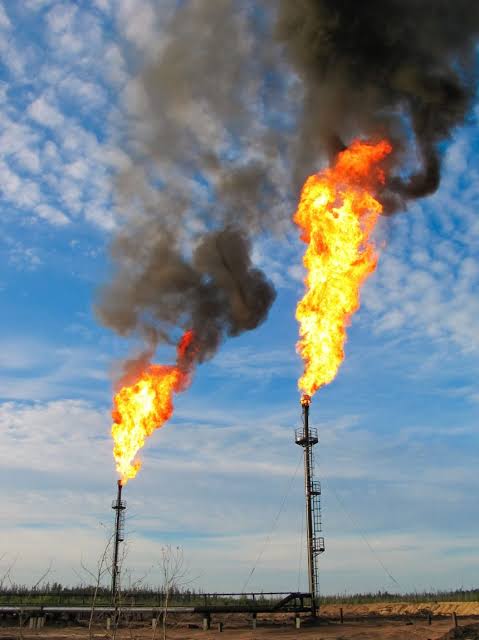
Nigeria flared approximately 76.92 billion standard cubic feet of natural gas
between January and May 2026 amidst rising Liquefied Petroleum Gas
(cooking gas) prices and persistent concerns over domestic energy shortages,
data published by the Nigerian Upstream Petroleum Regulatory Commission
has shown.
An analysis of the Commission’s monthly gas production status reports
obtained from its website showed that operators burnt a combined 76,919.78
million standard cubic feet of gas during the five-month period.
The flared volumes represent gas that could have been channelled towards
power generation, industrial use, compressed natural gas initiatives and
domestic cooking gas supply in a country grappling with high energy costs.
A breakdown of the figures showed that Nigeria flared 17,166.08 million
standard cubic feet of gas in January, accounting for 7.10 per cent of total gas
production during the month. In February, the volume of gas flared dropped to
14,085.55 million standard cubic feet, representing 6.44 per cent of output.
The commission’s data showed that 15,575.10 million standard cubic feet were
flared in March, equivalent to 6.40 per cent of total gas produced. The volume
declined slightly to 14,517.95 million standard cubic feet in April, although the
percentage of gas flared rose to 6.94 per cent.
In May, Nigeria flared an average of 0.57 billion cubic feet of gas per day,
translating to roughly 15.58 billion standard cubic feet for the month, while the
flare rate stood at 6.9 per cent.
The latest data came at a time when households and businesses continue to
contend with high energy costs and concerns over the availability of alternative
fuels. Findings showed that cooking gas prices jumped from an average of
N1,000 per kilogramme in January and February this year to as high as N2,400
a few days ago.
This is also because local producers of LPG have been unable to meet domestic
demands for gas, according to operators. For example, the sources stated that
there is a decline in LPG supply from the Dangote Petroleum Refinery due to
internal utilisation, not because the refinery exports, as is being speculated.
Although Nigeria holds Africa’s largest proven gas reserves, estimated at over
200 trillion cubic feet, a significant portion of associated gas produced
alongside crude oil continues to be burnt off at oilfields.
Energy experts have repeatedly argued that reducing gas flaring could
substantially improve domestic gas availability and support the government’s
“Decade of Gas” initiative.