


The National Coordinator, National Counter Terrorism Centre (NCTC), Maj.-Gen. Adamu Laka, on Monday disclosed that coordinated national efforts against terrorism financing within and outside the country has led to the successful prosecution of over 730 terrorism-related cases.
This is as he noted that more than 90 of the cases directly received the support of the Nigeria Financial Intelligence Unit (NFIU).
Speaking at the On-Site Meeting of the Financial Action Task Force’s (FATF) strategic simulation exercise to assess Nigeria’s efforts to adequately address money laundering and terrorism financing in Abuja, Major Gen. Laka commended the collaboration between the NFIU and other agencies, noting that the synergy has significantly curtailed the flow of illicit funds to terrorist networks.
He said, “Disrupting the financial lifelines of terrorist organizations is central to our national counterterrorism strategy. We remain firmly committed to this cause and deeply value our ongoing partnership with both domestic and international stakeholders, including the U.S. Department of Treasury”.
Laka commended the work of the Joint Standard Investigation Committee on Terrorism Financing, whose contributions have been pivotal in Nigeria’s enhanced capacity to investigate and prosecute complex financial crimes.
Reaffirming the Federal Government’s unwavering commitment to disrupting terrorism financing and eliminating illicit financial flows that threaten national and regional security, he emphasized that “the exercise provided a vital opportunity to evaluate the nation’s readiness and strengthen inter-agency coordination against money laundering and terrorist financing”.
“This mock exercise is not just a routine formality, it is a critical simulation to test the robustness of our institutional response and harmonize strategies before the FATF assessment.
He urged all stakeholders participating in the exercise “to maintain clarity, be meticulous in their reviews, and take full ownership of the national effort.
“The strength of our collective preparation will determine the success of the upcoming FATF visit and, ultimately, Nigeria’s removal from the FATF Grey List’, he said.
Laka added that Nigeria had recorded significant progress under the FATF International Cooperation Review Group (ICRG) Action Plan — particularly in areas of technical compliance, operational effectiveness, and inter-agency collaboration.
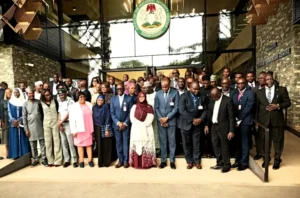
Chief Executive Officer of Nigeria Financial Intelligence Unit (NFIU), Hajiya Hafsat Bakari, in her remarks said impressive progress had been made towards completing all 19 action items on their action plans through collective national effort.
Bakari said the on-site exercise was an opportunity for them to demonstrate the progress made and the enduring commitment to an effective national FATF framework.
“The eyes of the global FATF network are on Nigeria and the expectations are very high hence the importance of this assessment is underscored by the size of the team coming to Nigeria.
“We will be hosting 11 reviewers covering all the immediate outcomes in our action plan.
“And considering the difficulty the FATF has previously had in finding reviewers to come to some of the countries in Africa, this is indeed quite a sign of confidence in Nigeria.
“I’m also delighted to inform you that as recognition of the excellent work we have all done and our regional and global leadership, the FATF has invited Nigeria to join its guest membership.
“This essentially means that Nigeria will participate under our own flag in the discussions and projects of the FATF.
“While this does not mean Nigeria is a full member, it is nonetheless a further step on our journey to having a seat at the table and reaffirmation that we are on the right track”.