


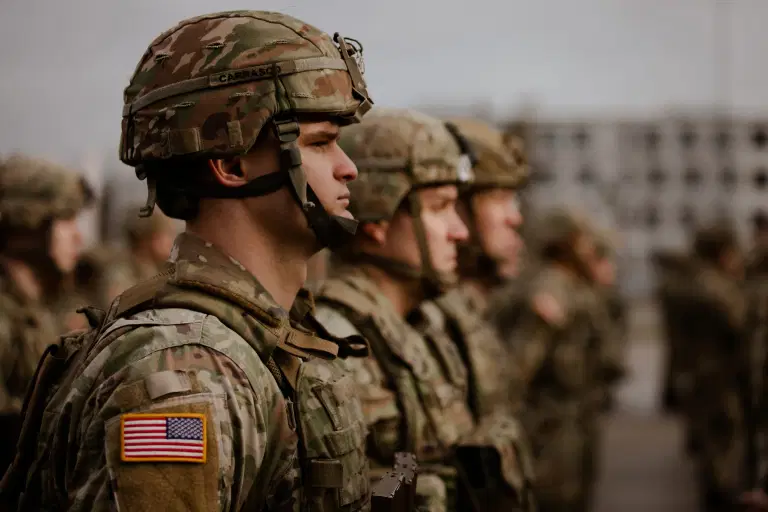
The first wave of U.S. military personnel has arrived in Nigeria, marking the start of a deployment of roughly 200 American intelligence analysts, advisers, and trainers to assist Nigerian forces in targeted counterterrorism operations aimed partly at protecting Christians, officials confirmed Friday.
A U.S. military plane landed in Maiduguri on Thursday night. Officials said the first tranche of about 100 troops will steadily arrive over the weekend, with several additional aircraft carrying troops and equipment expected in the coming weeks.
Maj. Gen. Samaila Uba, a Nigerian defense spokesman, said the U.S. troops would focus on training and technical matters.
“These personnel do not serve in a combat capacity and will not assume a direct operational role,” he said. “Nigerian forces retain full command authority, make all operational decisions and will lead all missions on Nigerian sovereign territory.”
The deployment follows recommendations from a U.S.-Nigeria joint working group, with U.S. personnel providing advisory support at various locations. A U.S. Defense Department official confirmed the noncombat focus, noting that Americans will operate primarily from command posts.
The footprint of the joint operations will span several volatile regions. A Nigerian official said troops will be sent to Northern states where jihadist groups like Boko Haram have been active, and to the Middle Belt, where violence against Christians has been pronounced.
Because the troops are landing in remote areas with limited infrastructure, early work will focus on setting up secure communications, base infrastructure, and operational security alongside Nigerian forces.
The first batch of newly trained Nigerian special forces was deployed to Plateau State this week. Moving forward, combined U.S.-Nigerian forces will build joint mission planning capabilities, using intelligence from both sides, including U.S. surveillance flights from Ghana.
The Pentagon described the mission as temporary, expected to last a few months, though successful operations could lead to further deployments