


By Joni Akpederi
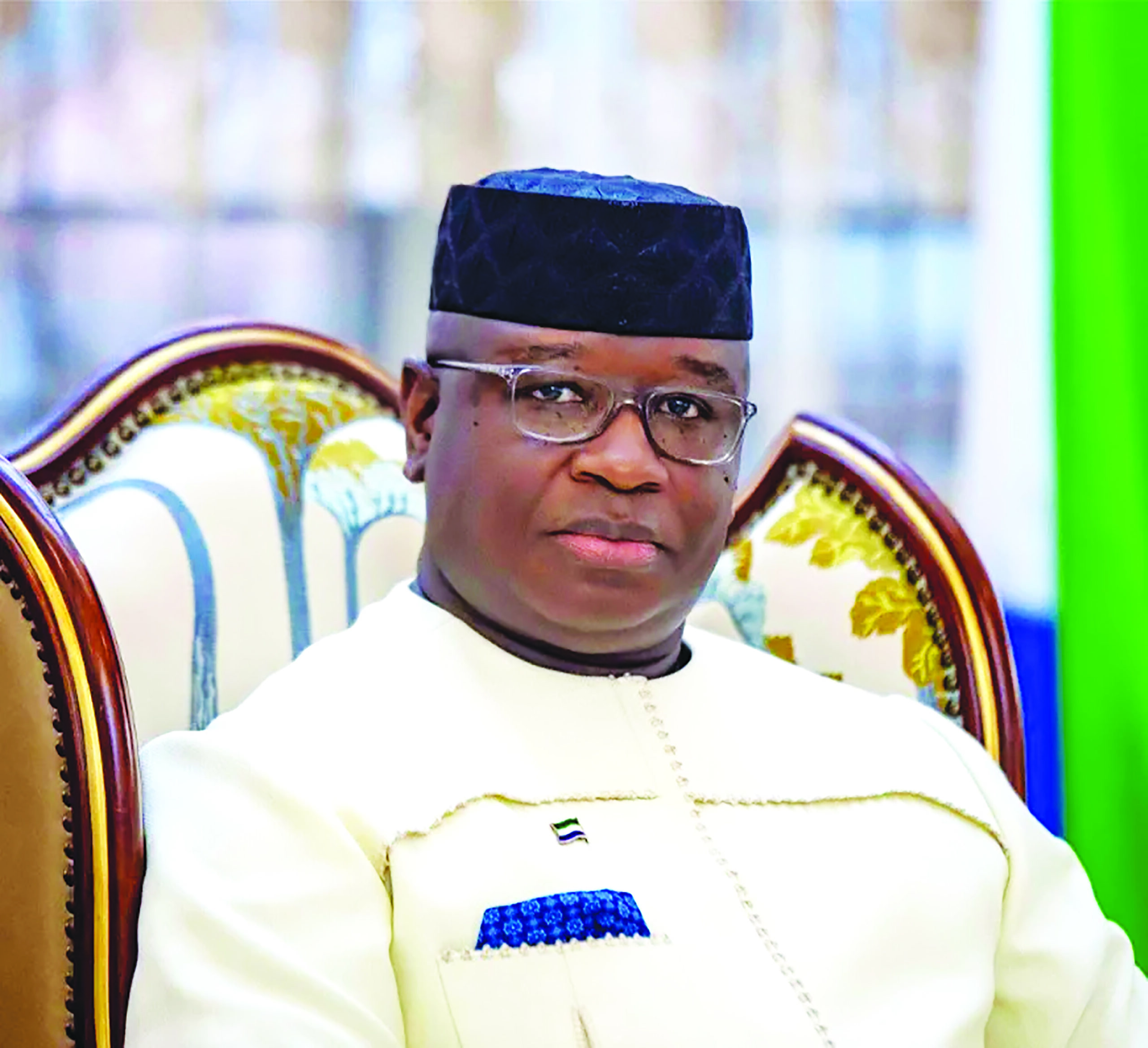
If anyone would succeed in bringing back the sovereign states of Mali, Burkina Faso, and Niger into the Economic Community of West African States (ECOWAS), it would be the current Chairman, Heads of State and Government, President Julius Maada Bio. As a former junta leader-turned democrat and internationally respected statesman, the affable President Bio is eminently qualified and well-positioned to coax the “renegade” junta leaders of the newly-formed Alliance of Sahel States to rejoin the larger and more strategically placed ECOWAS “family”.
Prioritizing dialogue over sanctions, cooperation over conflict and reconciliation over rancour, President Bio hopes to help build “peace, stability and prosperity” in the ECOWAS region as he has been doing in Sierra Leone since taking over democratic governance in 2018. It’s no wonder that the 2025 Global Peace Index ranks the country 2nd in West Africa, 5th in Africa and 57th globally; no mean feat for a country that was all but ruined in a brutal, economy-wrecking internecine war just a couple of decades ago.
In a well-delivered address at the opening of the third session of the Sixth Parliament of Sierra Leone’s Second Republic, just over a month ago, President Bio took stock of his stewardship of the country’s political economy since taking up the mantle of leadership. In the long, impassioned, detailed account, he counted Sierra Leone’s blessings and named them one by one, without neglecting to acknowledge that more work needs to be done to complete the ongoing transformation of the country and bring her into the league of progressive middle-income countries in the global comity of nations.
As the President made clear, “Sierra Leone’s international standing has never been stronger” in its over six decades of existence as an independent nation. The country now “stands tall” not just in the ECOWAS, but at the much larger United Nations, where it is a non-permanent member of the Security Council, and in the Peace and Security Council of the African Union (AU).
Stabilising the domestic macroeconomy
Back at home, President Bio’s administration has done its level best to ensure fidelity to the Medium-Term National Development Plan (MTNDP 2024-2030), the country’s current economic roadmap. Nor has it taken its eyes off the Big Five Game Changers whence the MTNDP got its bearings for the bold New Direction aid out seven years ago.
The results, as macroeconomic indices bear out, are real and getting more impressive as the days roll by.
Gross Domestic Product (GDP) for 2024 was a respectable 4%, running on the back of mining, agriculture, construction and services, notably tourism. Inflation is falling, tumbling from a heady high of 54.5% in October 2023, through 13.8% in December 2024, to 7.10% in June this year, thanks to sustained monetary and fiscal discipline. Exchange rate woes have calmed since the Leone recorded a 5.7% gain over the US dollar in 2024 and is showing signs of further appreciation.
Domestic revenue, which aims to reduce over-dependence on aid, while slightly short of target, the 2024 revenue nudged NLe14.61 billion, representing 8.8% of GDP. Most important, the much-improved government revenue plus the administration’s strategically reduced spending crashed the fiscal deficit from 46.6% of GDP to 39.5% of GDP in the same period.
The fact of Sierra Leone’s stabilizing macroeconomy was evidenced in November last year, when the International Monetary Fund (IMF) approved a US$243 million Extended Credit Facility to support the Bio administration’s economic reforms. The country has received the first tranche of $25million.
Game-changing mode: Food security
For a comprehensive assessment of the gargantuan national transformation agenda in the works in Sierra Leone, look no further than the outcome of the focus on the Big Five Game Changers. (See box: Big Five Changers at a glance).
Some of the palpable gains of Feed Salone give an insight into the impact of this game changer. Last year alone saw an 8% rise in the local production of rice, Sierra Leone’s staple, resulting in a 13% reduction in imports. The country saved US$15million in foreign exchange and recorded an impressive 2020 drop in rice prices. Similar gains have also been had in other commodities. While egg imports have declined 21%, other locally produced commodities such as onions and vegetable oil, are getting more available at cheaper rates to consumers.
The Bio administration is able to achieve these successes through a number of policy projects, including the Agriculture Value-chain Development Project, the Livestock and Livelihoods Development Project, fertiliser procurement, the agriculture mechanisation drive and the serious investment in such infrastructure as rural feeder roads with the support of a diversity of development partners.
In 2024, the government secured over US$800million in international pledges to support the Feed Salone programme. To date, $305million has been committed: $105 million for livestock development, $45million for cassava production, and $35million for critical road infrastructure. With such targeted investments and farmer-friendly policies, Sierra Leone is on the way to becoming not just a food-secure nation, but one that can make food exportation a main income earner for its economy.
Human development
A known bibliophile and education buff, President Bio believes that “no nation can rise above the quality of its people.” No wonder then that his government invests boldly in education, healthcare, and skills development, which he regards as “the true engines of productivity, innovation and opportunity.”
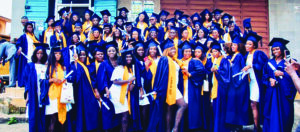
Since 2018, Sierra Leone has added over 1,500 classrooms to the nation’s educational institution’s stock along with 20,000 trained teachers to handle the growing number of pupils/students being enrolled in schools. Special attention is given to girls and returning child-mothers with provisions for free sanitary pads, first aid facilities, and the free school feeding progammme.
For young people who prefer to acquire practical skills, a well-conceived “WorkdonCam” (Creole for “work is now available”) project enabled by a US$990,000 African Development Bank (AfDB) facility is revitalising three technical institutes for training youths in agro-processing, waste management, and entrepreneurial skills.
Through a US$3.5million partnership with the United Nations Industrial Development Organisation (UNIDO), the government of Japan and the Ministry of Youth Affairs, a Centre of Excellence for Automotive Training at the Government Technical Institute offers 900hours of certified instruction to all classes of youth. Furthermore, UNDP supports training programmes useful in the construction industry. Students in tertiary institutions are benefitting from affordable internet services via Starlink in nine universities. Over 10,000 students currently use these services, while over 1,000 have been given concessional student loans.
There is no shortage of development partners. Convinced of the commitment of the Bio administration to the sustainable development of the education sector, many international development finance institutions and sovereign donors, including EXIM Bank, the German Agency for International Cooperation(GIZ), and China, are advancing concessional aid and grants to help Sierra Leone achieve its human development goals, which include improved healthcare and social welfare delivery.
Engaging the Youth: Game Changer 3
Two years ago, the government of Sierra Leone launched the Youth Employment Scheme (YES) with a mission of creating 500,000 jobs in five years. Less than halfway to the deadline, jobs are being generated from virtually all sectors of the economy, from agriculture through construction, mining, and energy to sports and the creative sector, thanks to the efforts of the National Youth Commission, which is co-ordinating a myriad of training courses to get young people ready for opportunities as they unfold.
Under the World Bank-funded Productive Social Safety Net and Youth Employment (PSSNYE), 8,000 young entrepreneurs are billed to each receive US$300 to grow their businesses. More are being trained in digital literacy and the new disruptive technologies reshaping the world as we knew it.
Leveraging technology for infrastructure
By intentionally leveraging technology, government systems are now interoperable, significantly reducing bureaucracy. The Government of Sierra Leone’s HR Hub, for instance, is digitalising payroll, thereby checking niggling incidents of “ghost worker” frauds, as well as absenteeism in the civil and public service at large. The 2025 Salone Innovates Digital Government Summit ran and showcased in-country, especially by entrepreneurial and gifted youths in the fields of AI, coding, and cybersecurity. Much of these activities were funded and enabled by resources from China EXIM Bank and the World Bank for optic fibre expansion in 14 districts of the country.
The telecoms sector is on a roll. Mobile telephony coverage now exceeds 97% of the country. Over the past year, voice subscription grew by 18% and data by 65%. Sierra Leone now has four mobile network operators and one fixed network operator. Currently also, there are 32 Internet Service Providers (ISPs), 20 TV stations, and an almost unbelievable 194 FM radio stations.
‘Energising’ the economy
This year’s United Nations General Assembly provided Sierra Leone the platform for signing the 300 Energy Compact billed to enable the mobilisation of US$2.4billion for the crucial investment in the weak power sector. Earlier, it had signed a US-government-led US$480million MCC Compact for transmission infrastructure expansion. Add that to the country’s participation in the recent AU-African Development Bank Mission 300 Power Initiative, it is easy to see how seriously President Bio takes his country’s power supply challenge. Without reliable, affordable power, he says, the country’s hope of ending the niggling, economy-wrecking energy poverty would be a mirage.
International partners’ positive response
Happily, Sierra Leone’s prospects of succeeding are good owing to the Bio administration’s focused efforts at making enduring sacrifices and commitment to good governance. Pleased with the reforms and progressive policies, the international donor community responds with aid, grants and other forms of assistance, lending support whenever feasible.
The Organisation of Oil Exporting Countries (OPEC) Fund, for example, recently approved 60% of resources needed to expand the Bumbuna Hydroelectric Power output by 50MW. In the renewables end, the 40MW RESPITE Solar Project is to deliver 30MW at Newton and 10MW at Lungi, which is expected to be online by early next year. Another 40MW renewable SCATEC Solar Plant in Kamakwie is getting set to feed the national grid. The administration hopes to expand electricity access to 78% of the population while upping renewables to 52%. Altogether, the goal is to exceed 1,000MW of electricity generation capacity by 2030.
Roads, aviation, waterways, and rail
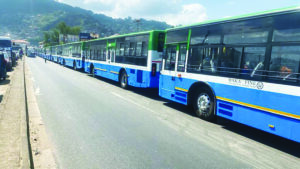
Investments in transportation infrastructure remain central to nations’ economic wellbeing, and Sierra Leone cannot be an exception. So far on President Bio’s watch, 418kilometres of roads and 17 bridges have been added to the nation’s infrastructure stock. These are thoughtfully and strategically distributed countrywide to even out development and ensure inclusivity. The government has had the benefit of donor buy-in with the support of the AfDB, the Kuwait Fund and the Arab Bank for Economic Development in Africa(BADEA).
Not resting fully on foreign aid, the Public-Private Partnership (PPP) model is also being exploited. A good example is the SIETRA’s concession on the Koblo-Gulama (Mabang) Bridge and the 86-kilometre Moyamba-Gbangbatoke Juntion Road.
The aviation sector has also had a touch of the ongoing infrastructural update. Air Sierra Leone, a PPP airline carrier, is currently making air links to the country better. It has joined Ethiopian Airlines as a regular operator in the country. Efforts to attract other operators in that route are ongoing as bilateral air service agreements with Saudi Arabia and the Czech Republic show.
The Bio administration recognises the fact that modern rail infrastructure is crucial for enhancing trade, industrial development, and national competitiveness. Against this background, it has established the Sierra Leone Railways Development and Regulatory Authority to oversee all railway planning and regulation. A reputable international company has been contracted to conduct feasibility studies that will guide a National Railway Master Plan aligned with the administration’s development and regional integration priorities.
Public sector makeover
Sierra Leone’s public sector as a priority area for transformation is built on the need to maintain integrity, transparency, accountability and professionalism in service delivery.
After a comprehensive upgrading of the Individual Performance Appraisal System (IPAS) and completing the first major Civil Service Code review in 15 years, the new 2024 Civil Service Code has been adopted, featuring rules and regulations in tune with global best practice and standards.
The Mo Ibrahim Index of African Governance ranked Sierra Leone among the 10 best-governed countries on the continent. Its 54.5% score places it 7th out of the 54 countries surveyed. The country’s rollout of the Integrated Financial Management Information System (IFMIS) to its 20 government Ministries, Departments and Agencies (MDAs) in 2024 is helping to streamline payment processes, internal controls, and inventory management.
International cooperation mode
Even as Sierra Leone works to transform its own economy from within, it has not neglected to build its trade and business relations with the rest of the world. The country’s action and contributions to global discourse at all levels show that it is open for mutually beneficial relationships with partners and the promotion of global economic growth and development.
As of the last count, the country had signed trade and investment agreements with 10 countries, including Turkiye, South Korea, Saudi Arabia, and the United Arab Emirates. Recently, it concluded the World Trade Organisation’s Fisheries and Subsidies Agreement, underscoring its commitment to fair and sustainable global trade.
Remarkably, Sierra Leone was the first African country to complete the African Continental Free Trade Agreement (AfCFTA) Readiness assessment, demonstrating its open-door policy and readiness to cooperate with all bonafide partners in the quest for global peace and prosperity.