


By Kelechi Deca
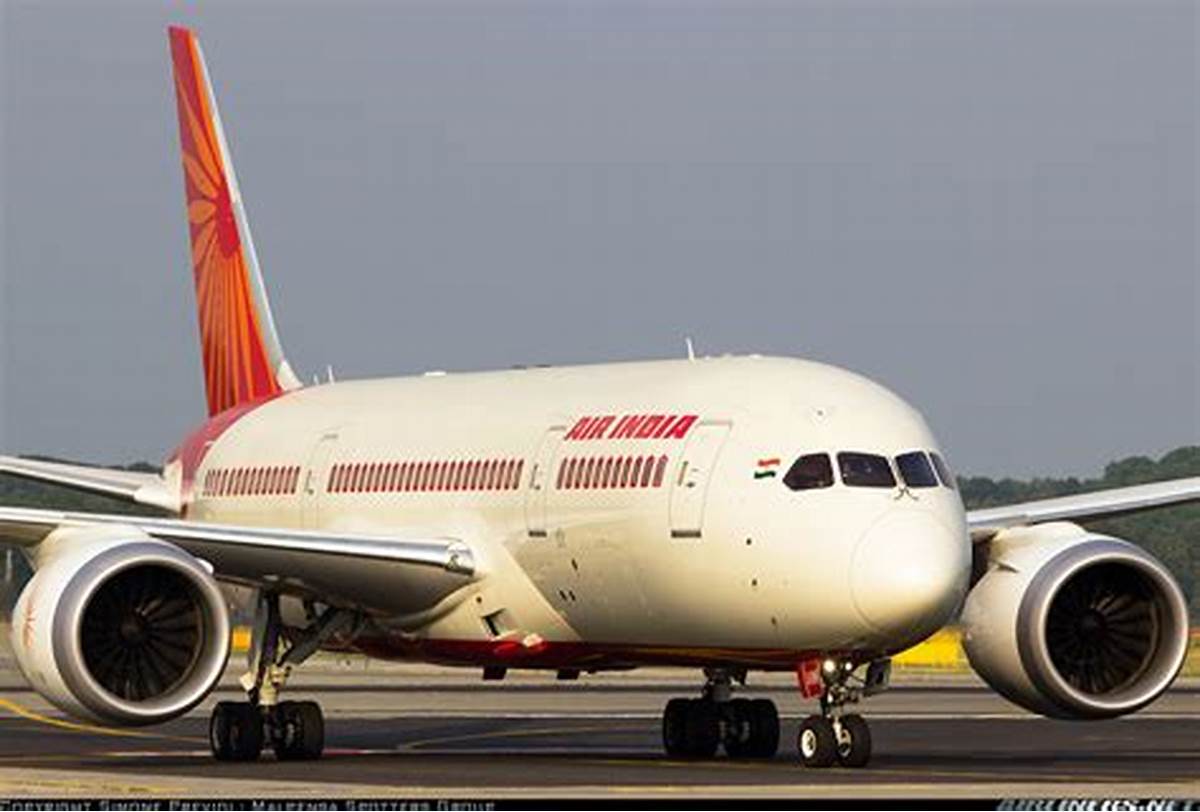
As a frequent flyer and aviation lover, today’s event involving Air India’s Boeing 787-8 has brought sorrow to my heart. I imagined that point when it dawned on the passengers that this is the end, especially families traveling together. As I ruminate on this, my mind traveled back to India, tracing the day I flew in an Air India flight from New Delhi to Ahmedabad, the same airport this ill-fated aircraft crashed in. What makes air accidents events that throw the entire world into mourning is the quality and composition of the victims.
While relatives are still mourning the loss of their loved ones in the fatal air crash involving Air India’s Boeing 787-8 Dreamliner, analysts have started digging into what this entails for the airline manufacturer amid speculations surrounding safety records. What we know as at the present is that the Air India Flight 171 took off with 242 passengers and crew on board, among the passengers, 169 Indian nationals; 53 British nationals; 7 Portuguese nationals;1 Canadian national.
This incident is different in many ways, but most especially, it is the first air crash involving a Boeing 787 family since its launch 15 years ago. The aircraft is touted as one of the most sophisticated with top range safety features. This crash has put a dent on that claim. particular aircraft is 11 years old, and was delivered to Air India on January 28, 2014, according to data from Cirium, an aviation analytics firm. The aircraft had accumulated more than 41,000 hours of flying time, and almost 8,000 takeoffs and landings, which is average for an aircraft of its age, according to Cirium.

The widebody twinjet was operating a scheduled service to London Gatwick Airport (LGW), with flight tracking data suggesting that it transmitted its last signal at an altitude of around 625 feet. This means it was still ascending when whatever happened to it happened. According to coverage by Flightradar24, tracking data pertaining to the flight suggests that it reached a maximum altitude of around 625 feet before crashing outside the airport perimeter, with reports suggesting that the 787 came down on a medical college hostel.
According to London Gatwick International, the “AI171 that crashed on departure from Ahmedabad Airport today, was due to land at London Gatwick at 18:25,” and already scheduled to operate a flight back to Goa this evening, with this service having subsequently been canceled. The Boeing 787-8 is the smallest and oldest version of the Dreamliner series, able to carry up to 248 passengers, according to the aircraft maker. The model’s fuel efficiency and long range have made it popular with airlines. While the variants differ in length, all Dreamliners have the same wingspan of nearly 200 feet, Boeing says.
Some aviation experts also noted that the wing flaps on the Dreamliner did not appear to be extended. Those flaps are normally extended during takeoff to help increase lift and lower stall speed. Others think that the engines were not putting out the amount of power they needed to be putting out. A statement issued by India’s Directorate General of Civil Aviation (DGCA) confirmed that the crew of the aircraft “gave a MAYDAY Call to ATC, but thereafter no response was given by the aircraft to the calls made by ATC.”
Bad for Air India
Some aviation experts are analyzing the video at present, and one issues some have raised is the positioning of the Flaps of the aircraft especially as the gears are still down.
Departing early Thursday afternoon local time, Flight 171 used “the full length of Runway 23 at Ahmedabad,” having “backtracked to the end of the runway before beginning its take off roll,” Flightradar 24 said via Bluesky.
But with poor visual quality, not much can be ascertained for now. If investigations arrive at Pilot’s error that would be bad news for an airline that recently started pulling its weight across the region and internationally since the takeover by Tata Group. Tata Group bought over Air India three years ago and has pumped money into the venture to improve both human capacity and infrastructure.
Some aviation experts also noted that the wing flaps on the Dreamliner did not appear to be extended. Those flaps are normally extended during takeoff to help increase lift and lower stall speed. However, others disagree saying that the Boeing 787 is equipped with a Takeoff Configuration warning System (TOCWS), so the master caution alarm would’ve gone off if the flaps weren’t extended. On this 787 it’s not that easy to tell if the flaps are extended on takeoff especially in a rather low quality video.
Bad news for Boeing
Boeing shares have taken a hit with this news. And may receive more hits if investigations point at equipment malfunction. This is the first crash involving a B787 family since it launched in 2009. The Boeing 787-8 is the smallest and oldest version of the Dreamliner series, able to carry up to 248 passengers, according to the aircraft maker. The model’s fuel efficiency and long range have made it popular with airlines. While the variants differ in length, all Dreamliners have the same wingspan of nearly 200 feet, Boeing says.
This is not good for the American aircraft manufacturing giant that is yet to fully recover from the disaster caused by Boeing 737 Max aircraft. Just yesterday, I was reading the latest market report from Boeing where they were bullish about May. In May, Boeing secured more than 300 aircraft orders, including the largest widebody aircraft order in history, placed by Qatar Airways. The plane maker handed over 45 jets and rolled out 38 new 737 MAX aircraft, reaching its planned production target.
Qatar had placed firm orders for 75 Boeing 787-10 Dreamliners, 45 Boeing 787-9 Dreamliners, and 30 Boeing 777X aircraft, along with options for an additional 50 jets. This strong performance comes ahead of the upcoming Paris Air Show 2025, where Boeing plans to highlight its focus on innovation, partnerships, and collaboration.
The saving grace for Boeing in this Air India crash would be if the error that brought down the 787 has nothing to do with equipment malfunctioning mechanical, electrical or navigational. If not, there would be a flurry of cancellations and another period of image tarnishing.
It could be recalled that American regulators grounded the entire 787 fleet worldwide for more than three months after lithium ion batteries caught fire on two of the aircraft in 2013, leading to smoldering fires in the cargo hold. Boeing had to craft a workaround and created a metal box to surround the batteries to prevent fires from spreading.
Bad for Geopolitics
If any form of sabotage is detected, then India would easily point accusing fingers at its neighbor Pakistan. Just last month, a Indigo Airline with 220 passengers from Delhi to Srinagar ran into heavy storms. The Pilot requested a safer passage through Pakistan airspace, but the Pakistani ATC denied that request, forcing the Pilot to brave the storm which damaged the nose of the plane and led to injuries of some passengers. If any sort of sabotage is detected in this crash, India would easily think of their enmity with Pakistan. And the outcome may shake the world.
Kelechi Deca, a journalist and public affairs analyst writes from Lagos